

100 questions to Askinadzi
30-04-2026

I consider Vladimir Askinadzi one of the best, if not the best witness of the search operation in 1959. If we apply the investigative motto "Means, Motive, and Opportunity" not for a suspect in a crime but for a witness, then Vladimir Mihaylovich checks all the boxes to be our best witness, that is. Here are the three most important things, in my opinion. First, he remembers, his mind is intact, but most importantly, his recollections are not biased by any theory. Second - he actually had the chance to find the bodies that had the injuries that couldn't be explained by anything else but "overwhelming force". Third, not the least, he agreed to answer our questions. I have always urged you to read what he has said throughout the years, but now we both agree that, in order to have consistent documents, it won't be a bad idea to revisit all his answers. It is a cart following tracks. If we try to continue where we ended, i.e., come up with new questions, then we presume that what has been said (the tracks) is firmly established. But they are not. So fire away! You can ask your questions in a comment here, in the Dyatlov Pass forum, in Taina.li, or on Facebook.

The idea is borrowed by Maya Piskareva and her 100 questions to Yudin. She died in 2017. Piskareva and Askinadzi shared a special bond.
You can cite a question by adding # and the number of the question to the link of the article.
1. A. Kaidalov: The essence of the problem is this: Ivanov, when closing the case, writes that on May 4, 1959, 75 meters from the fire, in the direction of the valley of the fourth tributary of the Lozva, i.e. perpendicular to the hikers' path from the tent, under a layer of snow 4-4.5 meters deep, the bodies of Dubinina, Zolotaryov, Thibeaux-Brignolle, and Kolevatov were discovered.
Also, there is a radiogram 5/5 at 9:30 a.m. The Kurikovs, 50 meters southwest of the cedar, in the place of a felled spruce forest, at a depth of 10 cm, discovered… (pieces of clothing)…" On the evening of May 5, apparently, you discovered the bodies in the stream under the snow.
Mohov also recalls that all discoveries occurred on May 5 (the day of publication that year).
Tempalov arrived from Ivdel on May 6 and wrote in the report that "all the bodies are in the water." They were excavated from under snow 2.5 to 2 meters deep."
Question: When you excavated Dubinina, was it possible that the bodies were discovered the day before without you and re-covered with snow (for example, to better preserve them in the cold), and then you rediscovered them the following evening?
Askinadzi: Firstly, all these "meters, tons, landmarks" have nothing to do with reality. Everything was measured "with a rope and a stick." The reliability is questionable, the coincidences are random.
And now the main answer. This couldn't have happened, even theoretically. The excavation volume, even with very rough estimates, was at least 9-10 cubic meters. Only a large team could have disturbed such a volume of compacted snow. Ortyukov didn't have that many "spare" people! I've repeatedly described how we excavated the ground: we used shovels to cut out blocks the size of construction blocks and manually removed them from the pit. So, in your opinion, whoever excavated the ground to place the bodies there would have had to, among other things, not only carefully bury the bodies again, but also compact the snow to a consistency that would allow them to form blocks the size of construction cinder blocks! Use your brain and imagination!
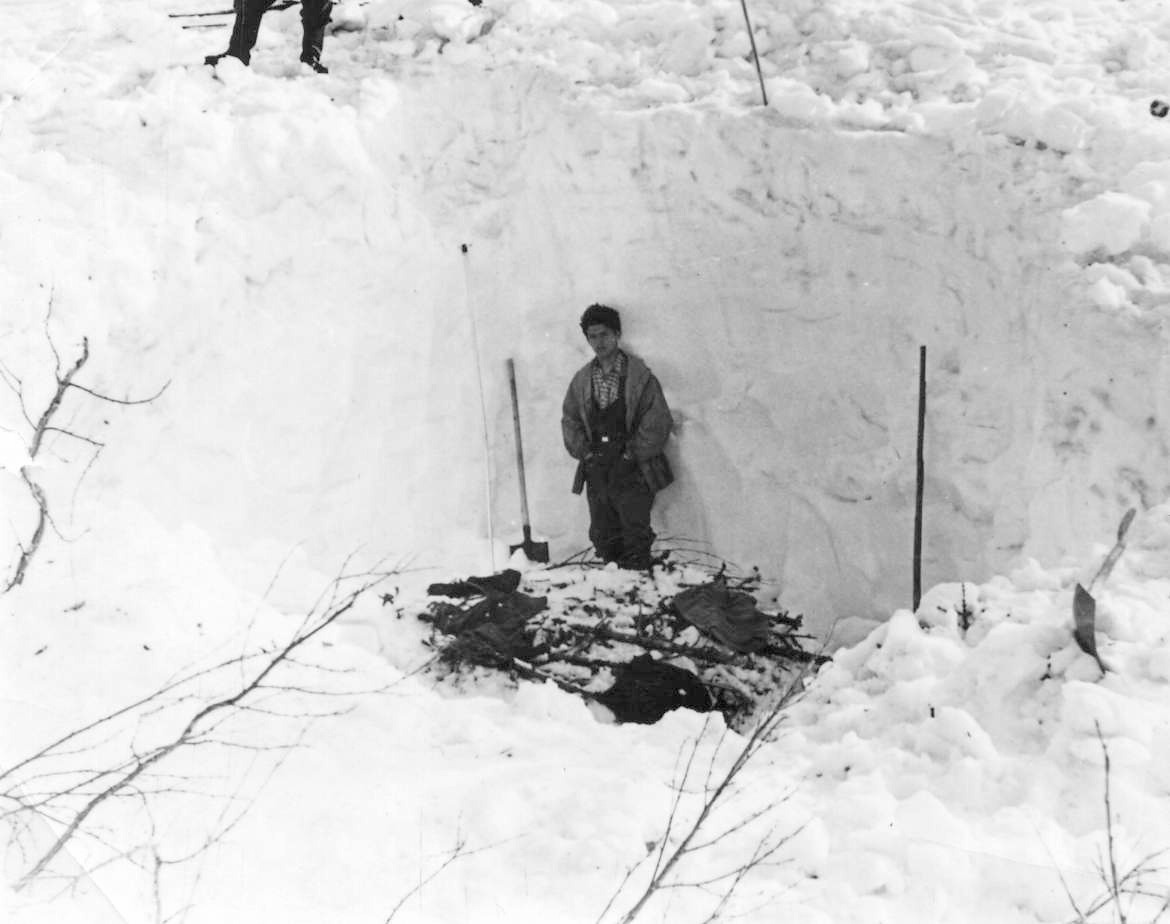
2. A. Kaidalov: You reported that search leader Ortyukov sent you 20 km to Otorten to look for traces of the Dyatlov group. I'd like to clarify: could this have happened specifically on May 4th? Do you think he could have sent you on purpose so he could do something secretly in your absence? For example, bury the bodies in the place where you later found them.
Askinadzi: I believe the answer to the first question has convinced you of the impossibility of such an event.
3. A. Kaidalov: Can you explain who Mohov is talking about to Sasha Kan (in 2012)?
MOHOV: There were five of us, 1, 2, 3, 4, and some other guy. I don't know him. By the way, he's not in the photo here. There are four of us here. And I don't remember that fifth guy, who was sitting with us at the table in Serov in the cafe where we were changing trains. But he was with us! There he is, sitting with us... and I don't even remember who this guy is.
KAN: Well, maybe he's a complete stranger?
MOHOV: Who the hell knows... But he's sitting with us, at our table. He's dressed the same as us. We all had the same windbreakers and boots that we were given at the military department.
Askinadzi: Perhaps you're talking about this photo?
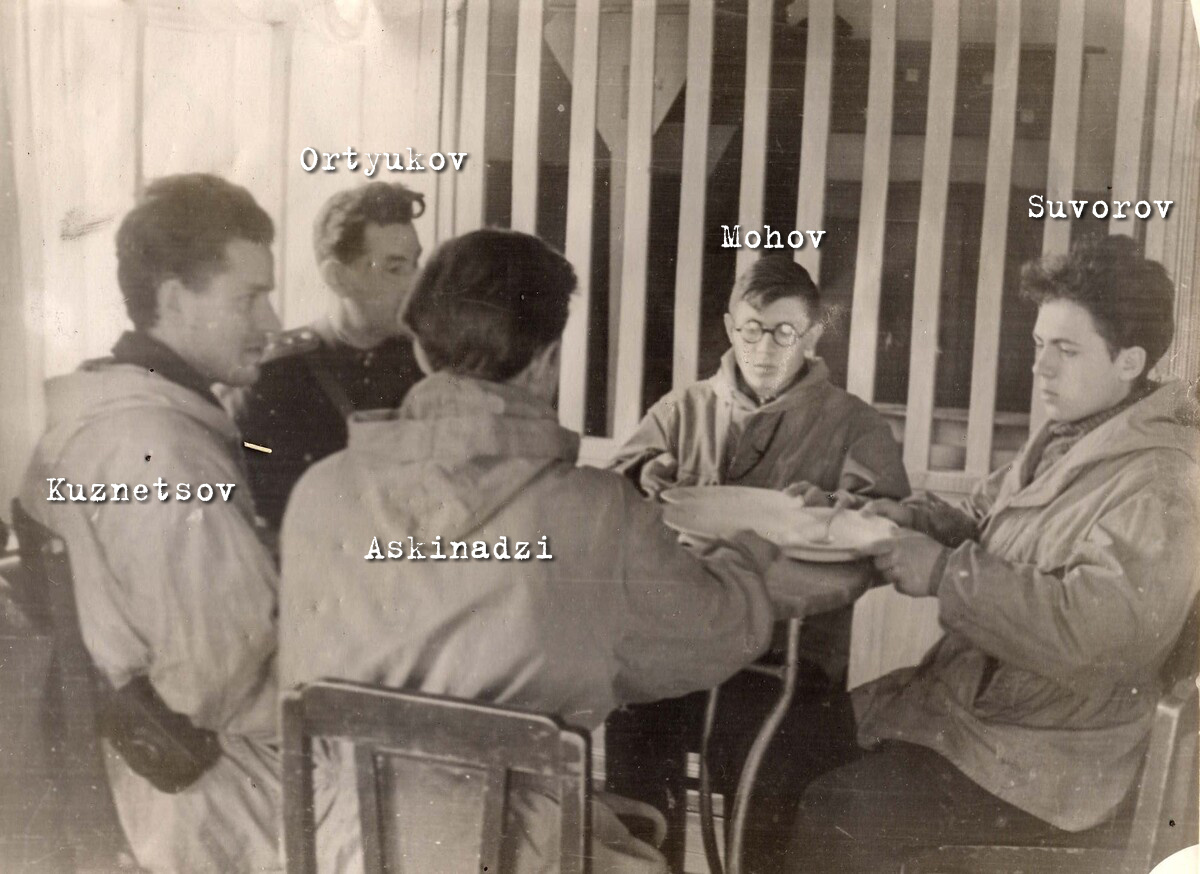
This photo was taken by Fedorov. I'm sitting with my back to the viewer. In the photo: from left to right... Kuznetsov, Ortyukov, Mohov (wearing glasses), Suvorov. Tolya Mohov is mistaken. This photo was taken in the cafeteria at Ivdel Airport, not in Serov.
4. A. Kaidalov: Do you remember which of Dubinina's legs was wrapped, the left or the right?
TEMPALOV: On one foot, there are two woolen socks; on the right foot, half of a beige sweater is wrapped. There are traces of probe damage on the back of the head and back, according to V.M. Askenadzi, who identified Dubinina.
VOZROZHDENNIY: Left leg - part of the shin and foot are wrapped in a gray, scorched woolen piece from a sweater with sleeves. On her left foot is a torn, brown wool sock.
IVANOV writes that Dubinina's bare foot is wrapped in Krivonischenko's wool trousers.
Askinadzi: See for yourself!
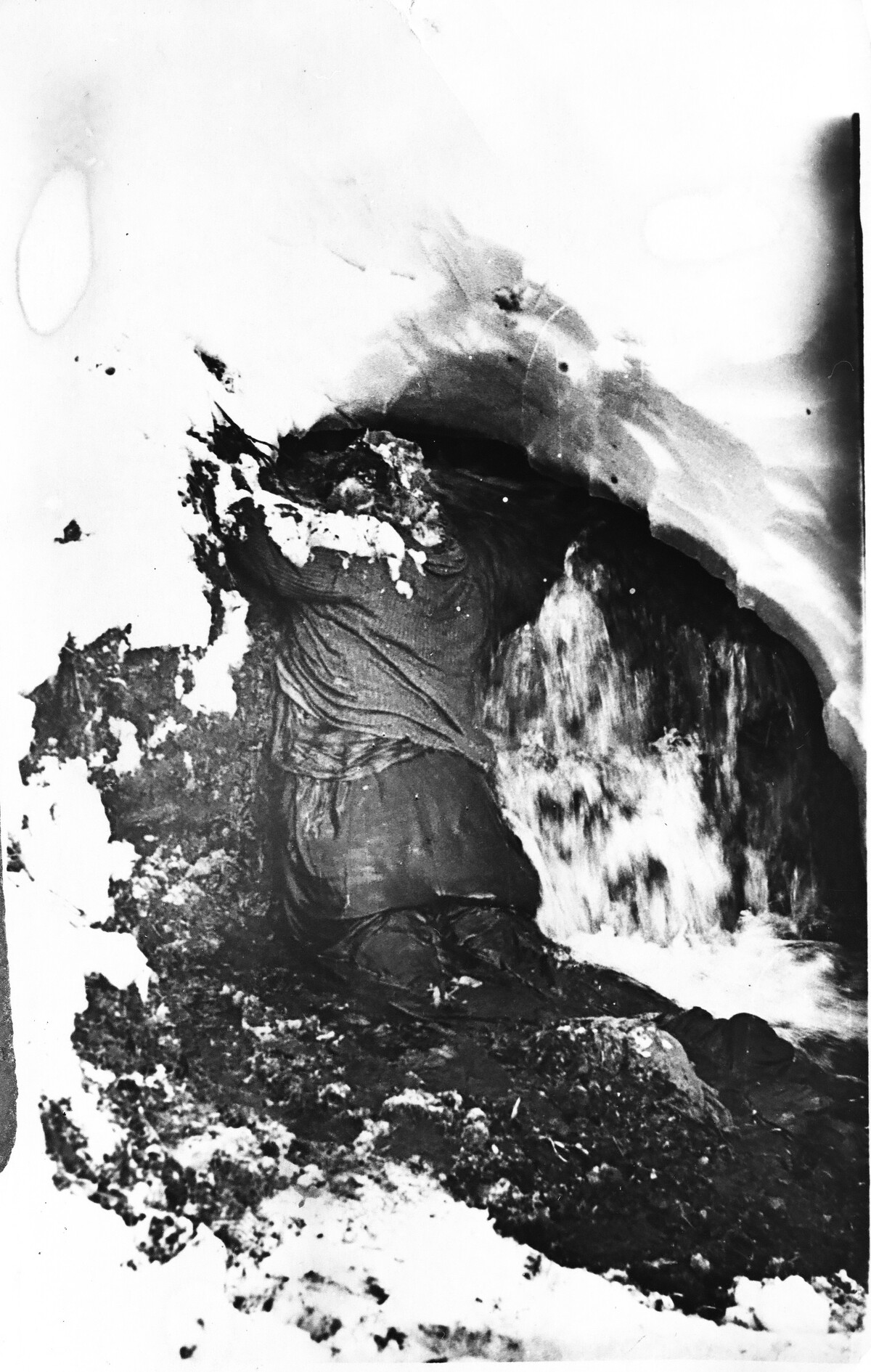
A. Kaidalov: Can you also clarify about the hats? Did anything fall off them during transport?
Askinadzi: I wasn't involved in transporting all the bodies, so I can't say what happened to the others.
5. A. Kaidalov: Do you remember if the bodies had head injuries (cracked skulls) or pierced necks (on the left, as in the photo, or on the right)? Was this discussed at all?
Askinadzi: No, it wasn't discussed. The revived one refused to perform an express examination of the bodies at the pass, demanding that they be transported to Ivdel.
6. A. Kaidalov: Do you remember if the bodies were loaded into the helicopter in zinc coffins, wooden coffins, or some kind of sewn-up bags? I recall it was the evening of May 8th.
Askinadzi: A brief summary of events.
As soon as all the bodies were recovered, we placed them in the liners of our sleeping bags, but the helicopter pilots refused to take them in that condition. Their instructions were that the bodies be packed in airtight containers. This is where Ortyukov and the pilot had a conflict. The helicopter departed without the bodies. We lifted them up to the pass, to the helipad, and, on Ortyukov's orders, set up an overnight watch. The next morning, the helicopter arrived with rubberized bags. We packed the bodies, without removing our liners, and shoved them into the helicopter as best we could.
That's it!!! After that, we could sleep as long as we wanted, cleaned the area, and gradually set up camp. I left on May 10th, the last ones – on May 13th.
7. A. Kaidalov: Are the memories true: Ortyukov, with his own hands and without even gloves, dragged corpses to stretchers? He later developed eczema, red bumps on his skin that took a long time to heal... Yudin says of 18-year-old Suvorov: "He was told he was poisoned while searching for tourists. They told him this back then, in 1959. And he underwent treatment for a very long time."
Askinadzi: I don't know.
8. A. Kaidalov: Do you remember Maslenikov's secret visit in May, when he saw the scorched branches and showed them to Ivanov? Could it have been student Mohov (aka Matyukov) with a similar last name?
Askinadzi: Perhaps he arrived after May 13th, when I was no longer at the pass.
9. A. Kaidalov: To what extent do you agree with the popular criminal theories? For example, the versions of Igor Titov, Anna Russkikh (or others), how much are they right?
Askinadzi: It's difficult to calculate a percentage, but essentially, this is the result (for the aforementioned authors) of a traumatized psyche.
10. A. Kaidalov: How did this event affect your grades, exams, and subsequent career? It is believed that Okishev was sent to Chisinau, and Ivanov to Kustanai – to other republics, farther from the epicenter. You ended up in Sevastopol. Or was there another reason?
Askinadzi: I was a student, and administrative transfers didn't apply to me. I passed my exams quite well, getting straight A's in all my core subjects. After the exams, there was a break until September 1st, so I managed to go to Altai and get a bad grade. From September on, we were all scattered to different companies to write our dissertations, and we were also kept on working there. This was in Snezhinsk, where I worked for 14 years. After completing my postgraduate studies, I was sent by the Ministry to Sevastopol, where I remain to this day.
11. Vicky Dunbar: What do you think happened to the group and have your initial thoughts changed over the years or do you still thinks what you originally believed?
Askinadzi: Naturally, as new information came in, my initial position also changed. My initial theory attributed the group's death to trauma to their skeletons from a three-meter layer of wet snow. But after the forensic expert at Vozrozhdenniy confirmed that the injuries were sustained while they were alive, I was forced to abandon this theory. My friend Sergey Sogrin continues to believe that this is the primary and only cause of the groups' death.
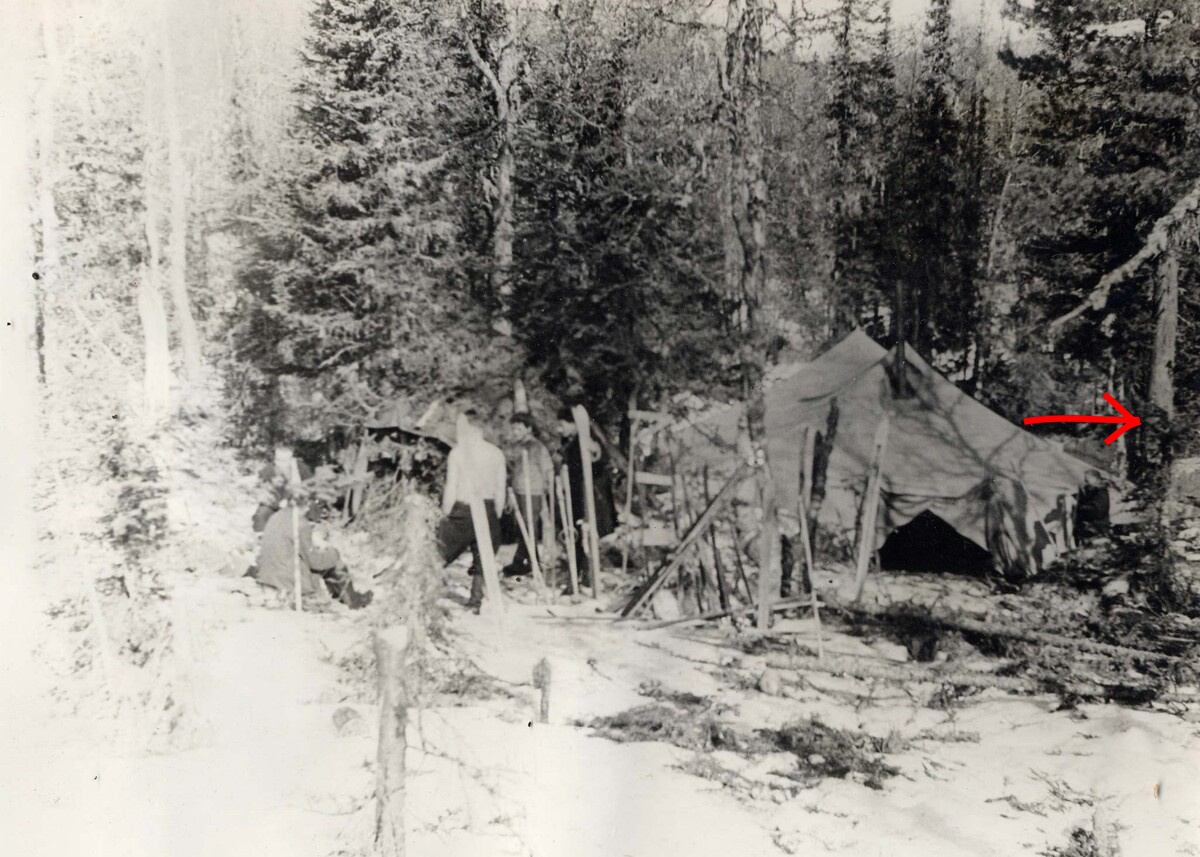
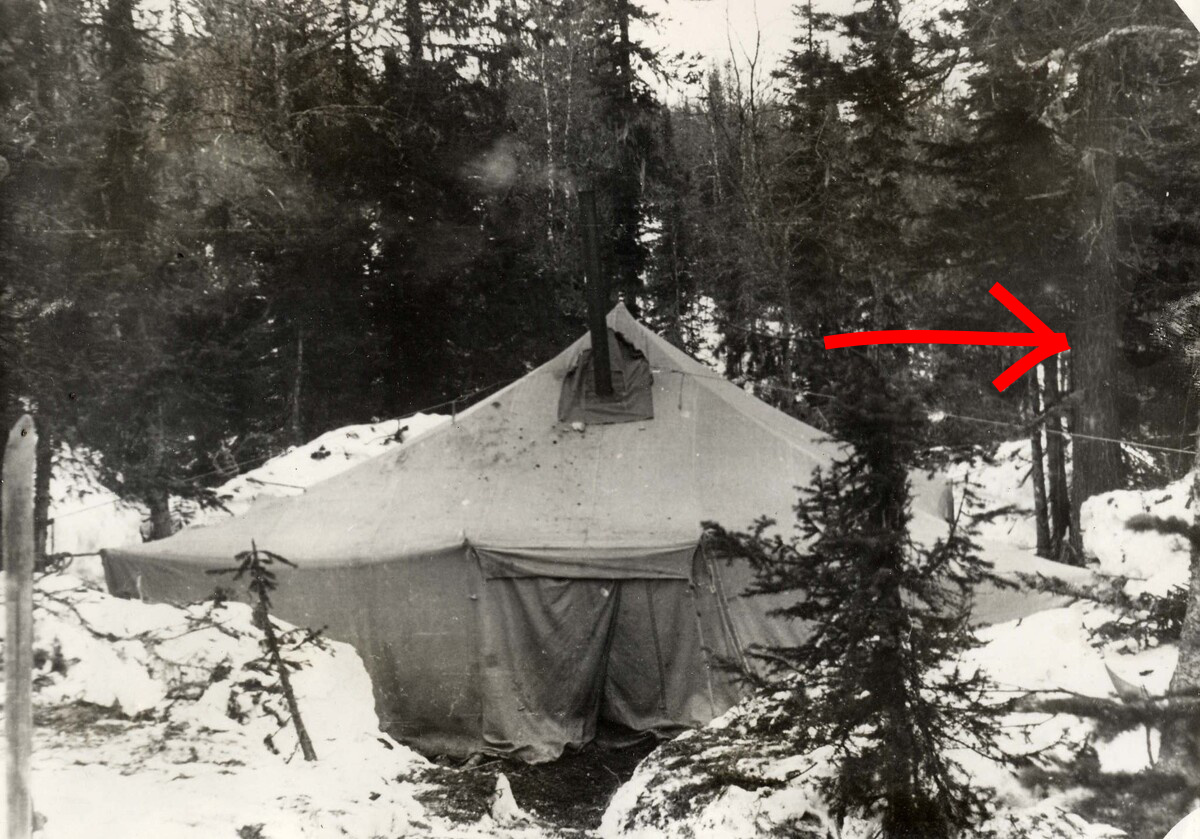
12. T. Hadjiyska: What is this on the photograph?
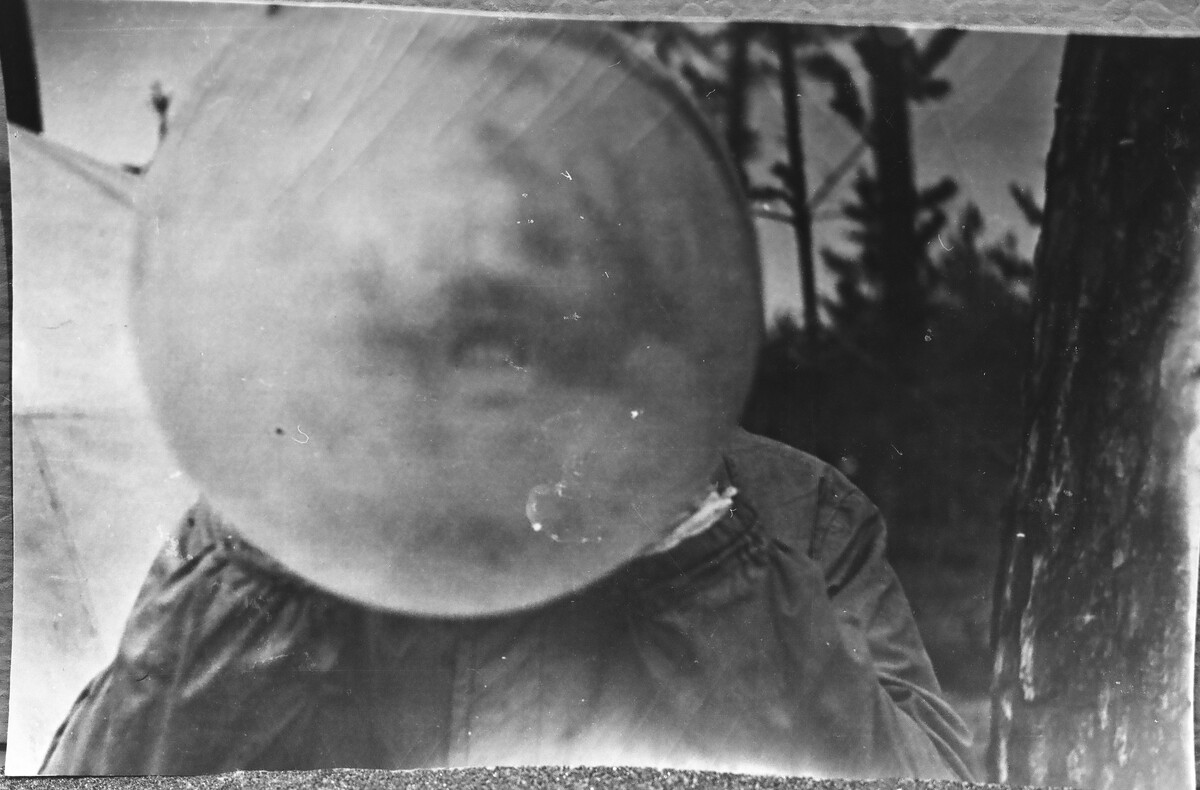
Askinadzi: I don't know. This photo has nothing to do with the search, at least not on our shift! There wasn't a large tree near our tent that you can see on the right side of the frame.
T. Hadjiyska: In the two previous frames, there is such a tree on the right side of the frame.
13. T. Hadjiyska: How did you protect your cigarettes, matches and documents from getting wet?
Askinadzi: We had no problems with dampness in the tent. Considering I'm a water hiker, we knew how to protect our gear from water.
T. Hadjiyska: Please tell us how you did this? Using plastic bags?
Askinadzi: There weren't any plastic bags back then. We glued them together ourselves from pieces of plastic film.
T. Hadjiyska: And one more additional question: did you carry drinking water between camps, and what did you carry it in?
Askinadzi: There's enough nearly distilled water in the mountain rivers to warrant providing containers for camp needs.
14. T. Hadjiyska: What happened to Zina's hat that she gave you and that you wore throughout the whole search?
Askinadzi: This hat was my talisman on many treks for several years. I lost it while crossing a difficult rapid on one of the Sayan rivers.


15. T. Hadjiyska: Was it common practice for all group members to write in a group diary?
Askinadzi: No. That's the group leader's decision. Given the specific nature of water trips, I wrote the general log myself, and was excused from setting up camp in the evenings for this purpose, if conditions permitted.
16. T. Hadjiyska: What do you think? Why did Thibeaux-Brignolle write when he had nothing to write about?
26.I.59 г.
I can't, even though I tried.
Kolya Thibeaux
Askinadzi: It would be good to ask Nikolay himself!
17. T. Hadjiyska: Did you keep a diary during your search? Where is it now? Did you regularly record what was happening at the pass?
Askinadzi: Yes. The diary was in my dorm room for a long time. But I treated it very carelessly. I'm almost 90 years old now, and I still remember many details clearly. I was only 22 then, and my memory was much better than it is now. So I wasn't particularly worried about the loss of the diary, believing that such a memory would accompany me throughout my life.
18. T. Hadjiyska: Is there anything in the group's known diaries that strikes you as odd? What do you think of theories that they were doctored?
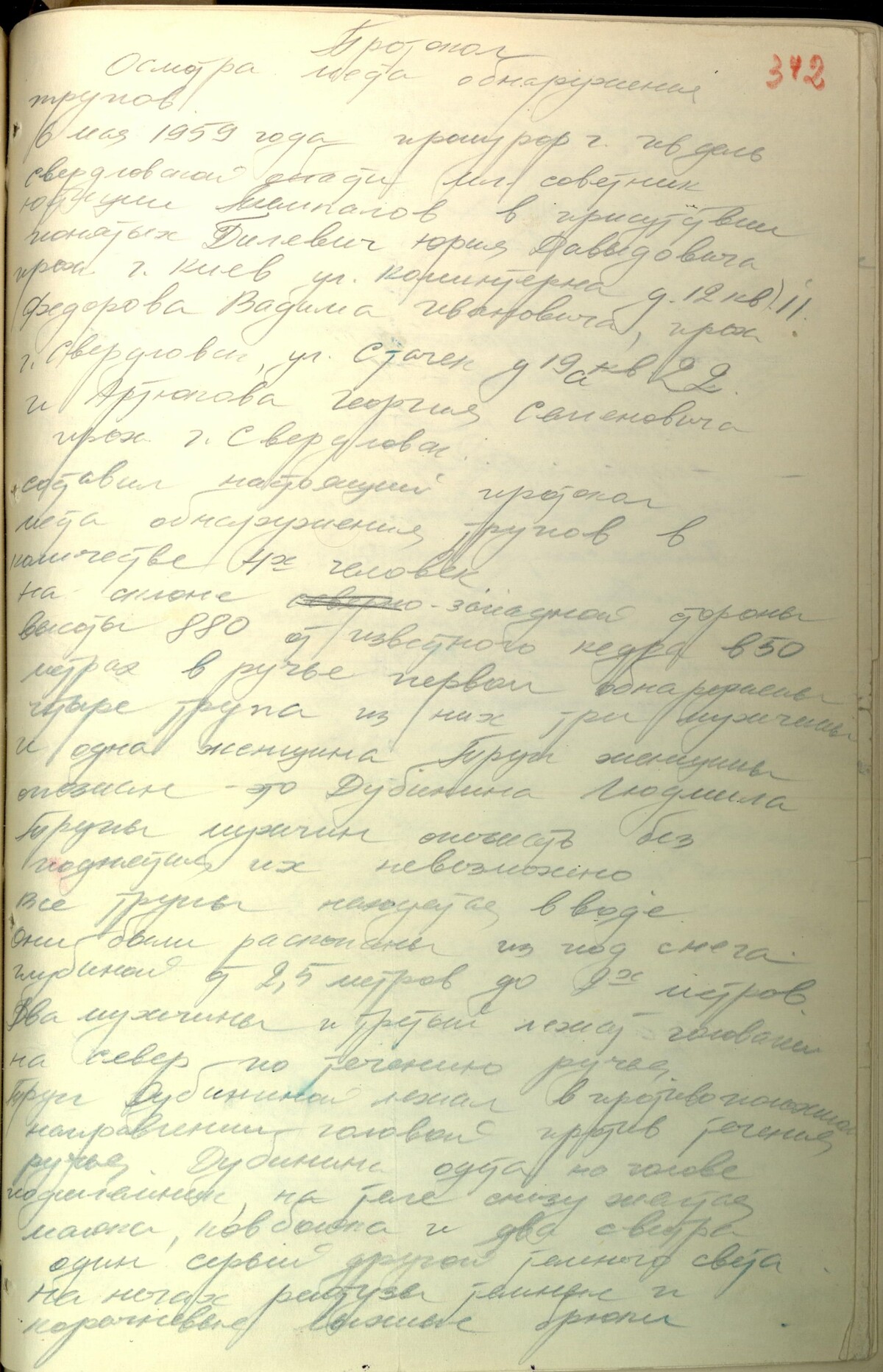
Askinadzi: I'm fine with that. There are no original versions of the diaries. The only established fact is the verbal statement of Lyuda's father, who claimed the handwriting in the diary wasn't hers! He should have presented a sample of Lyuda's original handwriting for comparison; then we could have made some kind of claim!
19. T. Hadjiyska: You signed the report on the inspection of the body discovery site on May 6th. Do you remember signing anything while you were at the pass? Is that your signature on the document? The last sheet with the signatures is folded, but the rest are not. Perhaps you were given this document to sign later? Do you have any idea how this could have happened? Keep in mind that I compared your signature, and if someone wanted to sign for you, they would have to have a sample of your signature. Is there a sample of your signature on any document at the UPI? Or on the non-disclosure agreement?
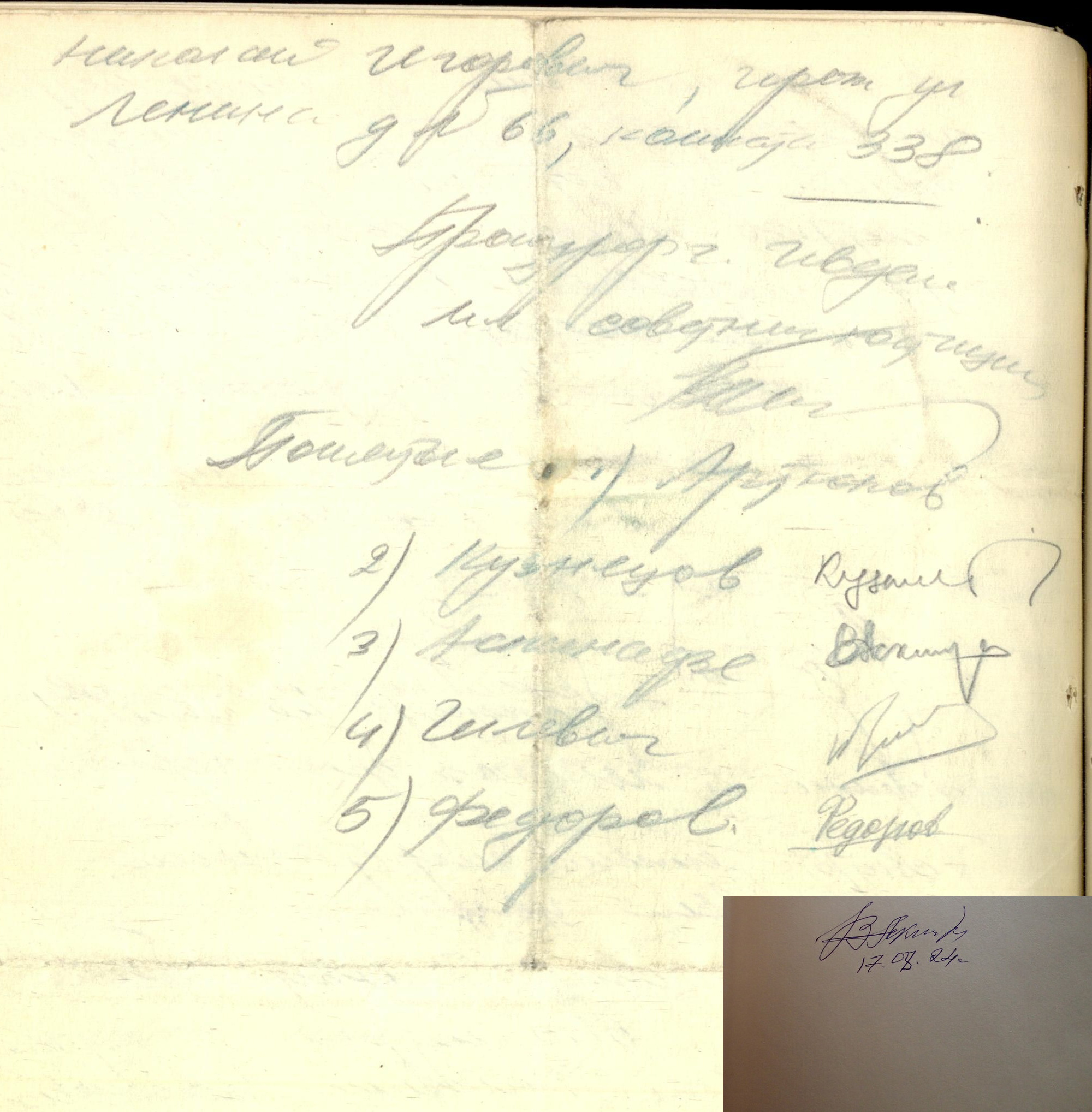
Askinadzi: The signature on the protocol isn't mine. Apparently, in the chaos, when everyone was busy with other, more important matters, Tempalov, who had Ortyukov's main signature, didn't find me and signed it himself. I can't explain it any other way. There was no sample of my signature at the pass.
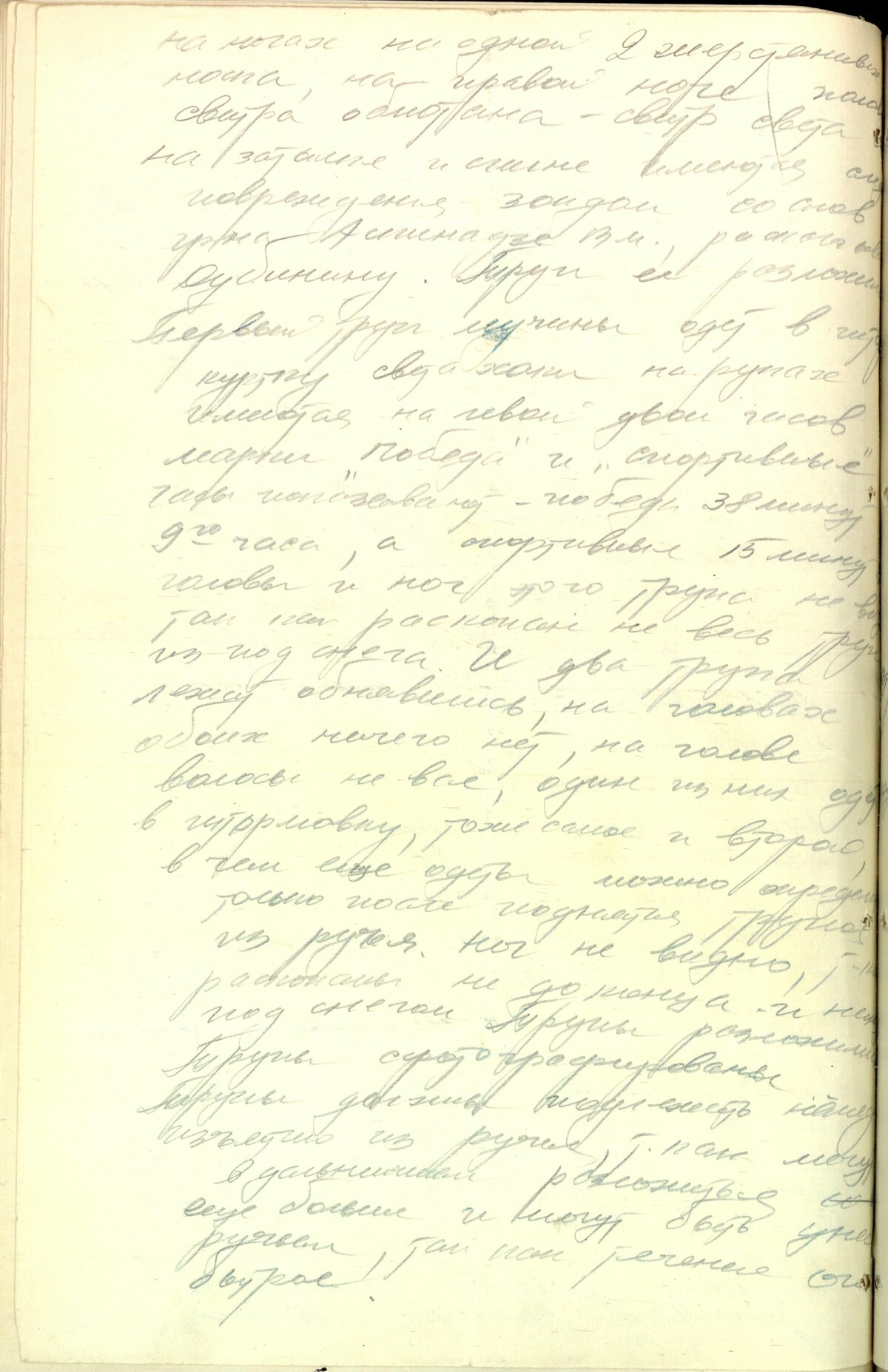
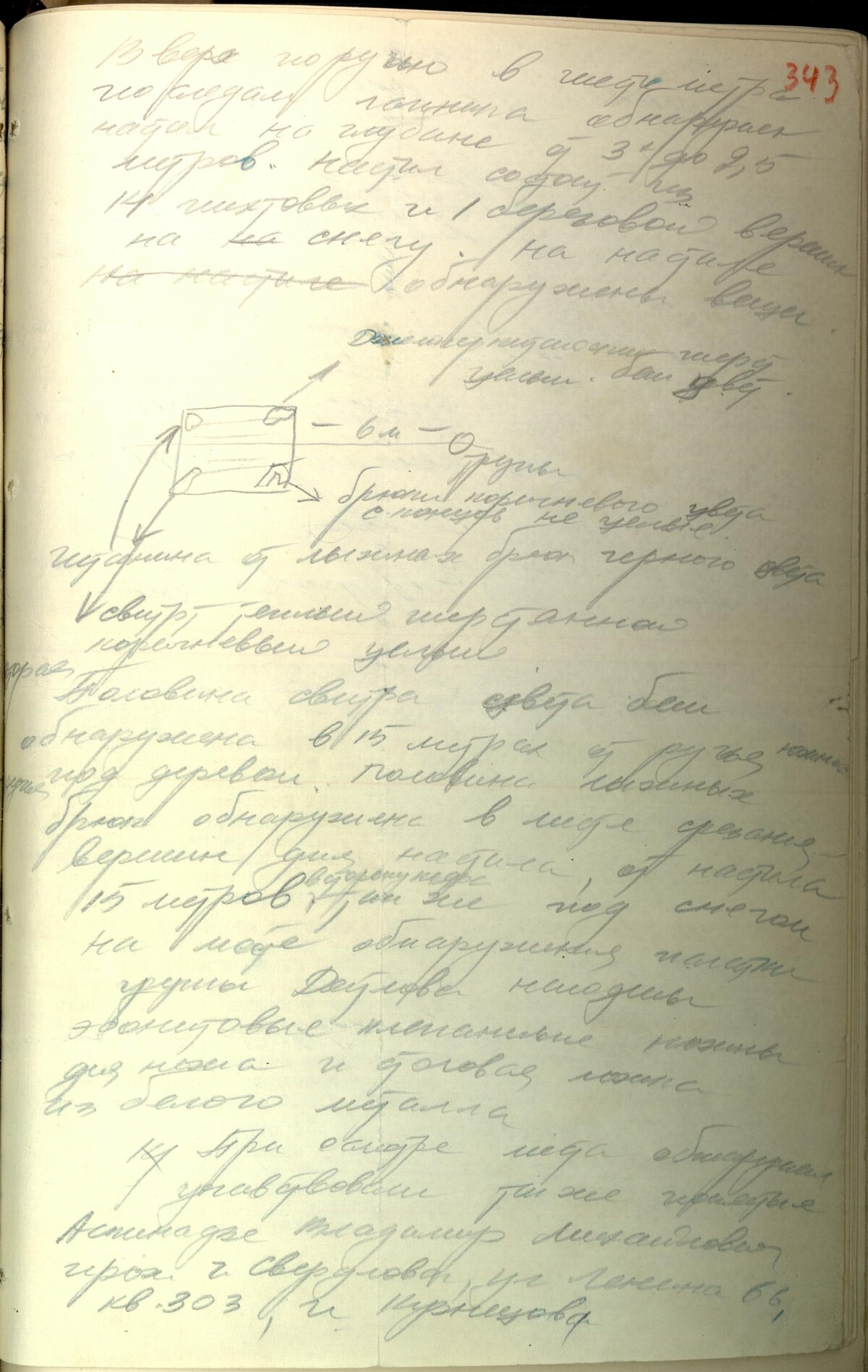
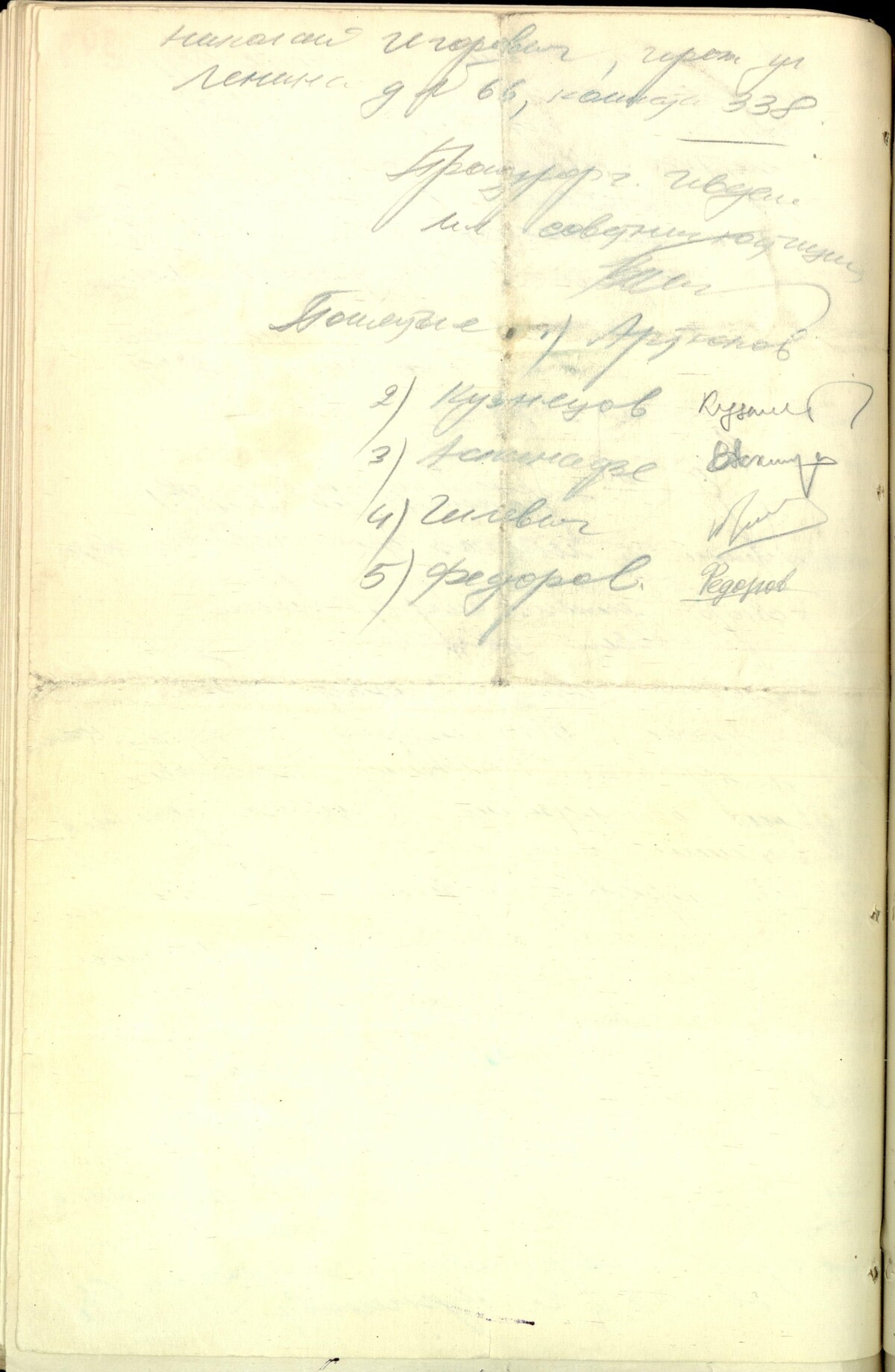
As a reference - Dyatlov's signature on a 1954 UPI document and on his last known signed postcard from Vizhay 1959.
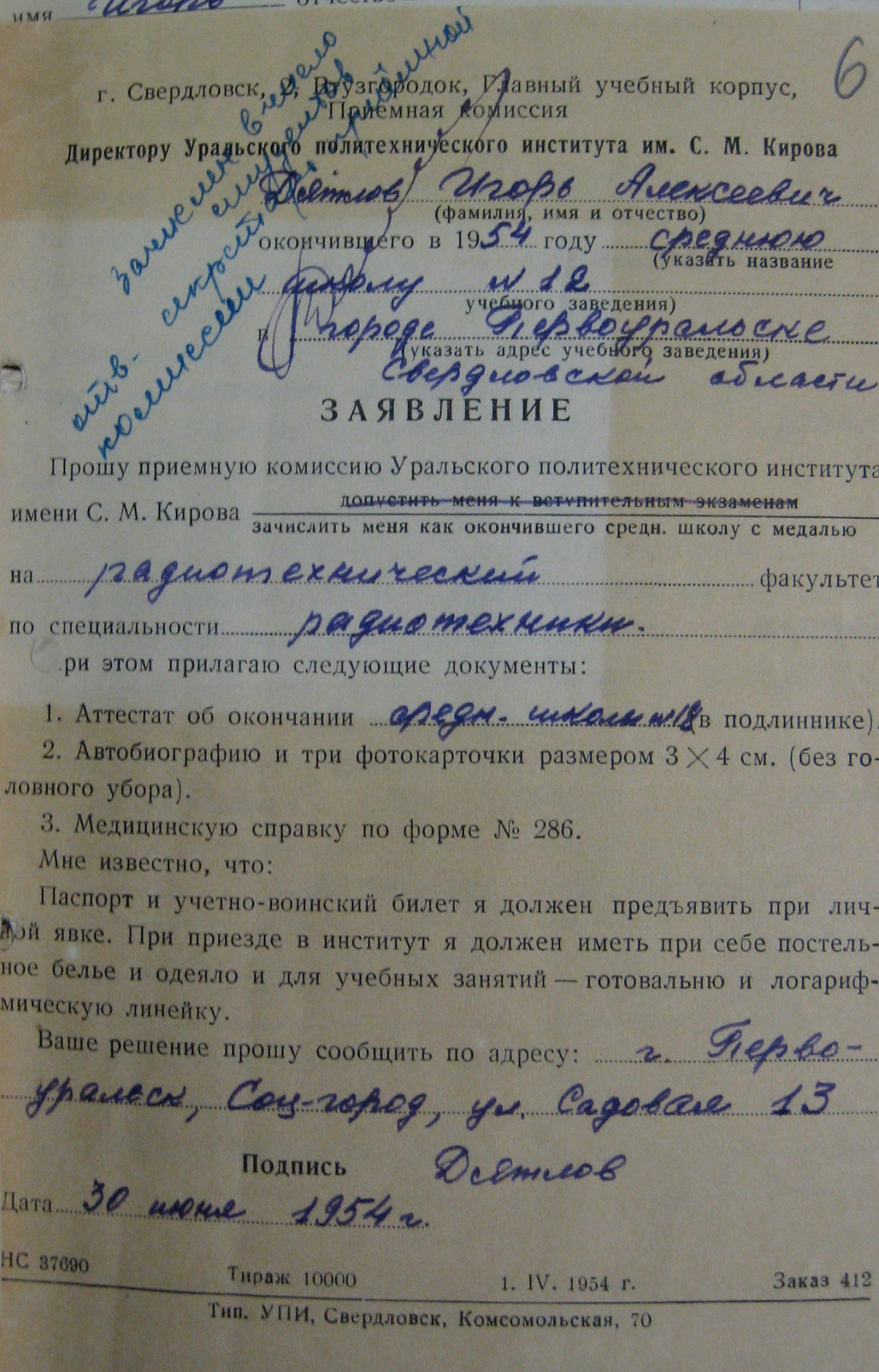 1954
1954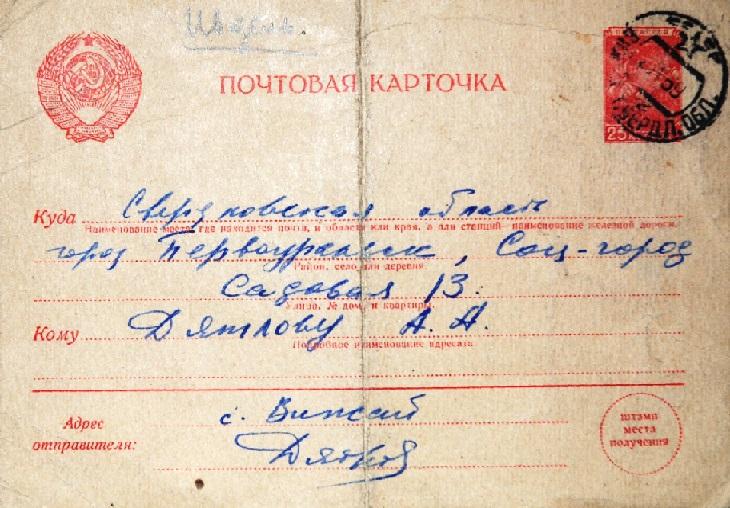 1959
195920. T. Hadjiyska: What would you do as a group leader if a hiker was seriously injured and couldn't be transported? You're far from a populated area. It's winter. So was the Dyatlov group. What would your plan of action be? Would you write it down in the group diary in advance, or would everything be written down later?
Askinadzi: If the injuries are "very serious", the decision is clear: stop the route, provide first aid, and focus all the group's efforts on transporting the victim comfortably. If possible, send two people lightly to the nearest village for help.
T. Hadjiyska: I understand this as you act to get the situation under control and write in the diary whenever there is time for this.
Askinadzi: That's right!
21. GlennM: The hikers were suspected of defecting to America, but your search party did not explore an escape route. They remained in the area of tent and cedar. Explain your decision to disobey your directive.
Askinadzi: Why, we searched! We just didn't find anything! Until May 4th, all we did was search for possible traces of the group's departure from its last campsite. And not just to the north, but in other directions as well. The direction of our radial excursions was always the result of decisions made at Ortyukov's operational meetings the day before.
22. Ziljoe: Looking back to 1959, is there one specific detail from the search that has stayed with you more than any other? If so, what made that detail stand out to you at the time?
Askinadzi: Probably not. All our attention was focused on the main goal—finding the guys. The peculiarity of our stay at the Pass was the feeling of hopelessness about achieving this goal until the snow melted. When they sent us off, the Party Committee warned us that there would be no replacements—we'd sit there until we found them. We were guaranteed a year's academic leave with our stipend and dormitory accommodations preserved. For me personally, this was unacceptable, although, for example, Seryozha Sogrin took advantage of this benefit, having been to the Pass twice.
23. Ziljoe: During the later stages of the search, was there anything about the ravine or the recovery work that you feel people today misunderstand?
Askinadzi: The entire history of Dyatlov case sleuth (Dyatlovedenye) suggests that no one can yet understand the true nature of this force... which the group was unable to overcome. Hence the plethora of theories, from the more or less plausible to the downright ridiculous! It's highly likely that someone was constantly misleading us throughout the search, from allegedly planting their tracks to blurring our search strategy. After all, Atmanaki had already noted the fir trees with their tops cut off that led us to the den, and Blinov had also noted this, but these thoughts remained just thoughts. Someone needed to obstruct and confuse the search works.
24. Ziljoe: Did the searchers discuss any mistakes or missed opportunities during the operation?
Askinadzi: Yes, of course. Each evening briefing with the colonel included a detailed debriefing of the previous day and a discussion of the tasks for the following day.
25. Ziljoe: When you reached the ravine, what were the first things you noticed about the scene?
Askinadzi: With your permission, I would rephrase the question as follows: "When you reached the ravine den, what were the first things you noticed thoughts about the scene?" Disappointment!!! What to do? Where are the people? There was one clear option – to dissect the stream above and below the den. The process promised a "sea of blood" (sweat - ed.) and several days of intensive work with shovels, of which we only had three. Fortunately, subsequent events freed us from this undoubtedly grueling work!
26. Ziljoe: Is there anything about the search that you have never been asked, but feel is important to say?
Askinadzi: Since I was constantly critical of the search strategy and tactics, how would I have organized the search if I had been in Maslennikov's shoes? The search team's first meeting in a hotel room in Ivdel revealed the organizers' helplessness. Their main mistake was their desire to immediately find the Dyatlov group, allowing the initial picture of the camp's condition, even in the tent area, to be destroyed in the first few days without documenting it. As an investigator, Tempalov was obliged to explain how the investigative actions began — it was his professional duty. As a result, the initial state of the scene was reconstructed from fragmentary recollections of the participants, and this until the very end of the search. We had only word of mouth.
27. Ziljoe: When you first saw the ravine area, did the snow cover look like it had drifted naturally over time, or did it seem more like a sudden collapse or settling of snow into the ravine?
Askinadzi: There was no snowfall whatsoever. It was clearly visible on the walls of the excavation — the stream valley was evenly filled with snow.
28. Ziljoe: During long days working on the slope and near the cedar, did your group ever take short breaks in that area — for example to rest, warm up, build a small fire, or have a quick snack — or was all of that always done back at camp?
Askinadzi: I don't remember needing to light a fire during daytime work, to warm up, say, tea or some other food. We walked without backpacks. We didn't take any food with us. We stopped to rest as needed. Nothing more!
29. GlennM: Does Mr. Askinadzi still recall lingering thoughts about where else the search should have gone if he was controlling the search?
Askinadzi: Yes. I would find a way to send a group of four or five people to the summit of Otorten to carefully search for traces, and perhaps even a note left by the Dyatlov group. Akselrod's group, which was there at the beginning of the search, had a different mission. They were unable to thoroughly examine the summit and outliers on it because they received urgent information that a tent had been found and they needed to return to the Pass.
30. A. Kaidalov: Judging by the records, they were missing one ticket. As someone from that era and a passenger on these trains, tell us how this was possible and how typical?
Askinadzi: For short trips, usually on commuter trains, letting someone off without a ticket was not only typical, but also an element of bravado and bragging! And on commuter trains, it was commonplace!!
31. T. Hadjiyska: "I can't even think of setting up a labaz"
What did Dyatlov want to say with these words?
Askinadzi: I can only guess why he wrote that in his diary. I think he understood that if the current regime continued, where the group could just lie around in the tent until the watchmen shouted "rise", the question of return deadlines would become pressing. Building a labaz would require a significant adjustment to the expedition plan in terms of timing. It wasn't on the expedition schedule. After all, they would have to return to the labaz after climbing Otorten, which would mean losing at least a couple of extra days. But the group insisted on ascending lightly. Zina wrote in her diary that Igor had finally agreed to build a labaz. The situation was almost conflictual. It was Igor's decision (apparently, not all was well with the "friendly" atmosphere in the group). But this is my understanding of why Igor (before talking with the group) wrote his attitude toward the labaz in his diary.
32. T. Hadjiyska: 1. When pitching a tent on a treeless snowy slope, skis are placed under it. 2. When pitching a tent in the forest, spruce branches are placed under it. My question is, are there skis under the spruce branches? Context of the question: I think the labaz is strange, but not if it was where the tent was found, on the slope. If someone had set up a labaz teh same manner as it was originally found on the slope, only in the forest, and they did the same with the tent, then if the tent was on spruce branches, how would they know how to pitch the tent on skis? But if the tent was on skis in the forest, then they did the same with the tent as they did with the labaz – they did it the same way they found it, but in a different spot.
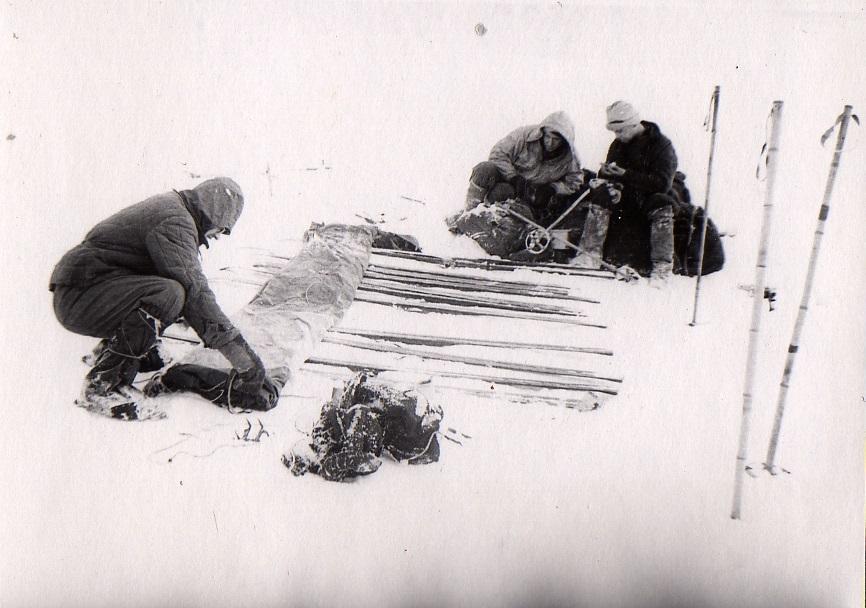

Askinadzi: It is at the sole discretion of the leader of the group if to put up a tent on skis or spruce branches. In winter when the days are short, sometimes there’s not enough time to set up a good camp (we arrived at the end point late). This is where you need to show power! Setting up a tent on skis takes much less time than on spruce branches, but there are some nuances - does the group have enough warm clothes to lay for insulation? If the leader decided, and he had the opportunity, to put up a tent on the spruce branches, it means he had enough daylight for this. But, in this case, he must either be an alpha leader or a the group to work well together. Setting up a tent on spruce branches will take much longer than with skis. At least half of the group will be diverted to this activity. If the hike is multi-day, the leader, even before setting out on the route, decides who will set up the tent(s), so that people know their job (this is practiced in training hikes) and, without a command, take axes and go to harvest spruce branches. Skis were sometimes placed under spruce branches when there was not enough spruce branches.
33. T. Hadjiyska: I have a question for you about the word "labaz." Have you ever used it for a cache site (supply storage) in your treks prior to 1959? The context of my question is as follows. The Dyatlov group began using this word after the day they recorded Mansi words, but it's not on the list. Searchers also used the word, but not all of them. I wonder if searchers started using it because they read the word in the Dyatlov group's diaries, or if it was just a common term for hikers? If the word wasn't so common we can trace back when did they first read the diaries.
Askinadzi: In our student hiking practice, the word "labaz" was used constantly and its understanding was unambiguous.
34. T. Hadjiyska: I showed Askinadzi photos of the tin cans I found in 2022 for a comment.
Askinadzi: Nikolay Kuzminov and I crushed the cans with our boots right by the fire. We buried them during the last three days of cleaning up after ourselves, not every day. We got our food supplies from the army depot in Ivdel. We opened all the cans with an axe (Askinadzi pointed at the second photo below). We never ate near the cedar, never brought tin cans there.
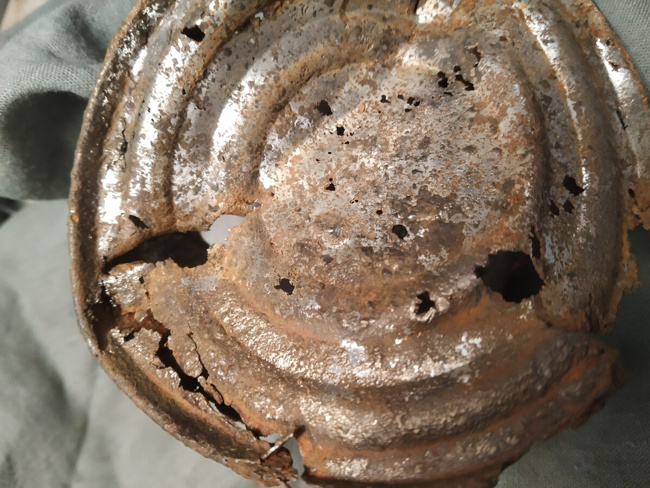
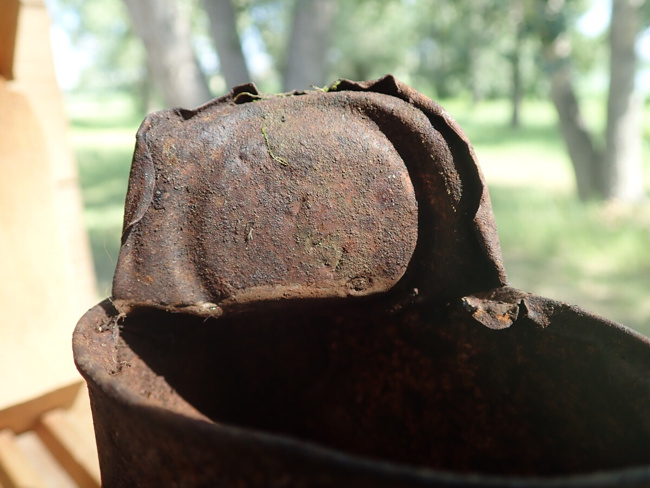
35. T. Hadjiyska: What happened on May 5th?
Askinadzi: The day before, May 4th, sometime after lunch, we accidentally discovered half a pair of trousers in the snow, cut open at the crotch, between a cedar tree and its cut-off tops. Previous shifts had long noticed these tops—Atmanaki, Blinov's group, and even earlier shifts. They had noticed, but they hadn't drawn any conclusions. We also hadn't drawn any conclusions about the cause of the "decapitation," wasting several days of searching. And what if we, students inexperienced in search skills, professional investigators, paid no attention to these decapitated trees. There was still plenty of snow, and half the trousers were still buried. But the day lengthened, the sun warmed inexorably, melting more and more debris from under the snow, until we were faced with the problem: where did this thing come from, whose is it? What to do tomorrow? These were the main topics of the evening briefing.
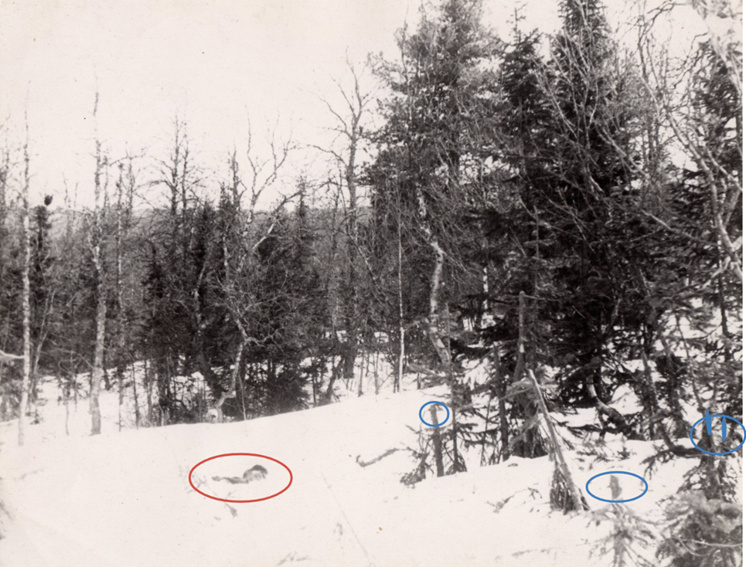
The red circle indicates the hem of the trouser leg, and the blue ones indicate the headless fir trees that are in the frame. (drawn by Askinadzi himself)
It was becoming obvious that we were "half a meter" away from the guys. No more wasting time searching for evidence of whether they had gone abroad, or whether everything we saw was proof they were somewhere very close!
We decided to open up the stream just above the cut tree tops, assuming the guys wouldn't carry the cuttings far from this spot. I went alone to mark the beginning of the excavation site. When I arrived, the Kurikov brothers were already standing there, talking in their own language. Stepan (the eldest), using a mixture of Russian words and Mansi gestures, showed me a barely noticeable trail of small twigs, no bigger than a little finger, ending about two meters from the cut tree tops. It was clear that we had to start digging along this trail. The three of us went to the tent to report to Ortyukov that the excavation should begin immediately from the cut-off tops.
That same day, May 5th, slowly, somewhere around midday (11:00–11:30), we began to carefully, digging out small sections of snow, moving along the trail indicated by the "small stuff." And this small stuff led us steeply downhill. We weren't in any particular hurry; the day was quite long, and we were trying not to lose the "trail" indicated by the "small stuff."
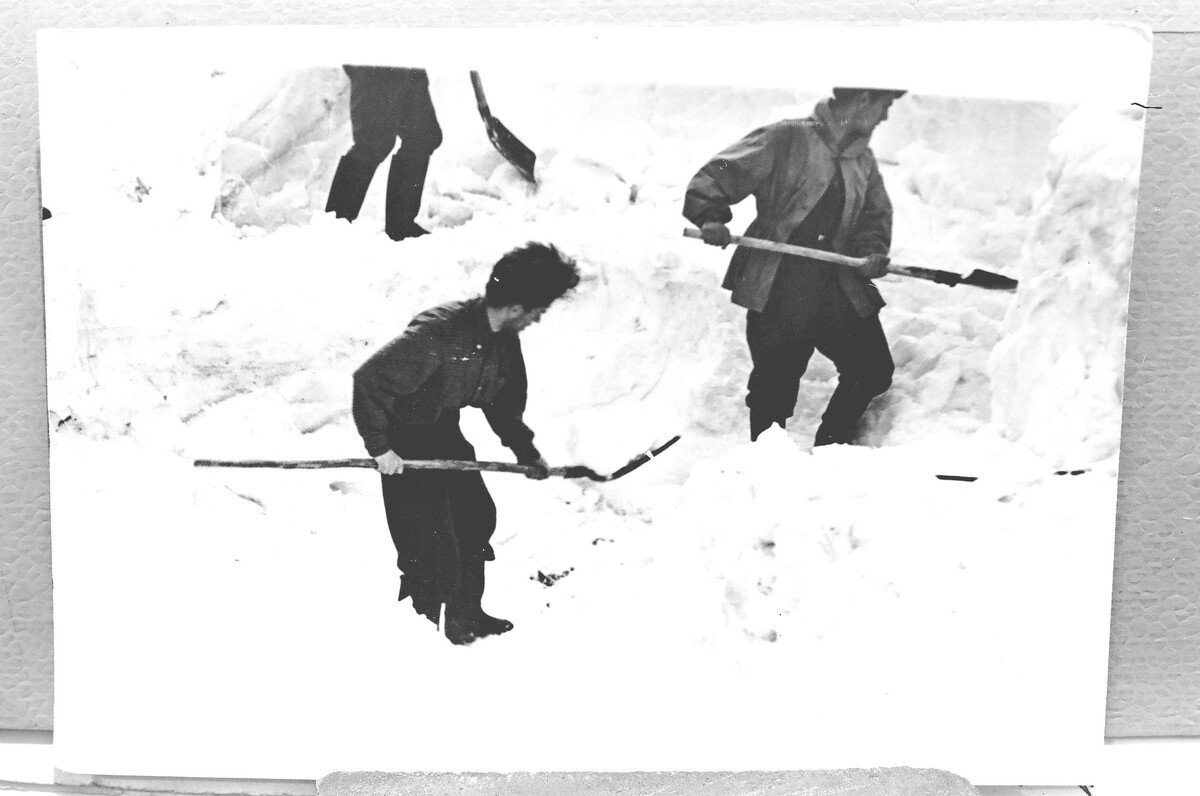
As a result of intensive work with shovels, of which we had only 3 pieces, we finally reached the den.
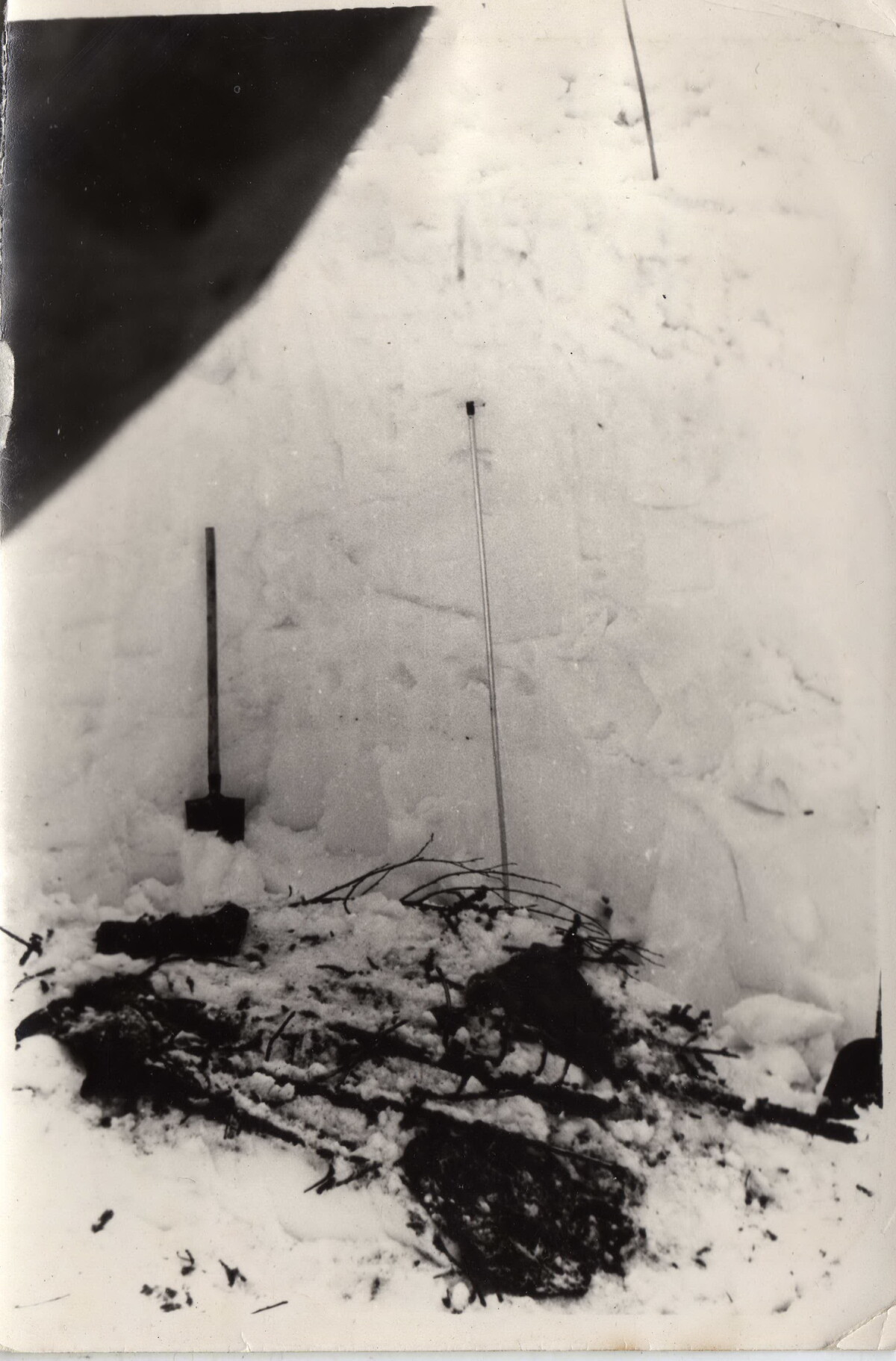
The top black corner of the photo is the edge of the tarpaulin we later used to shelter the guys from the bright spring sun.
The 2-meter-long emergency probe is installed for scale.
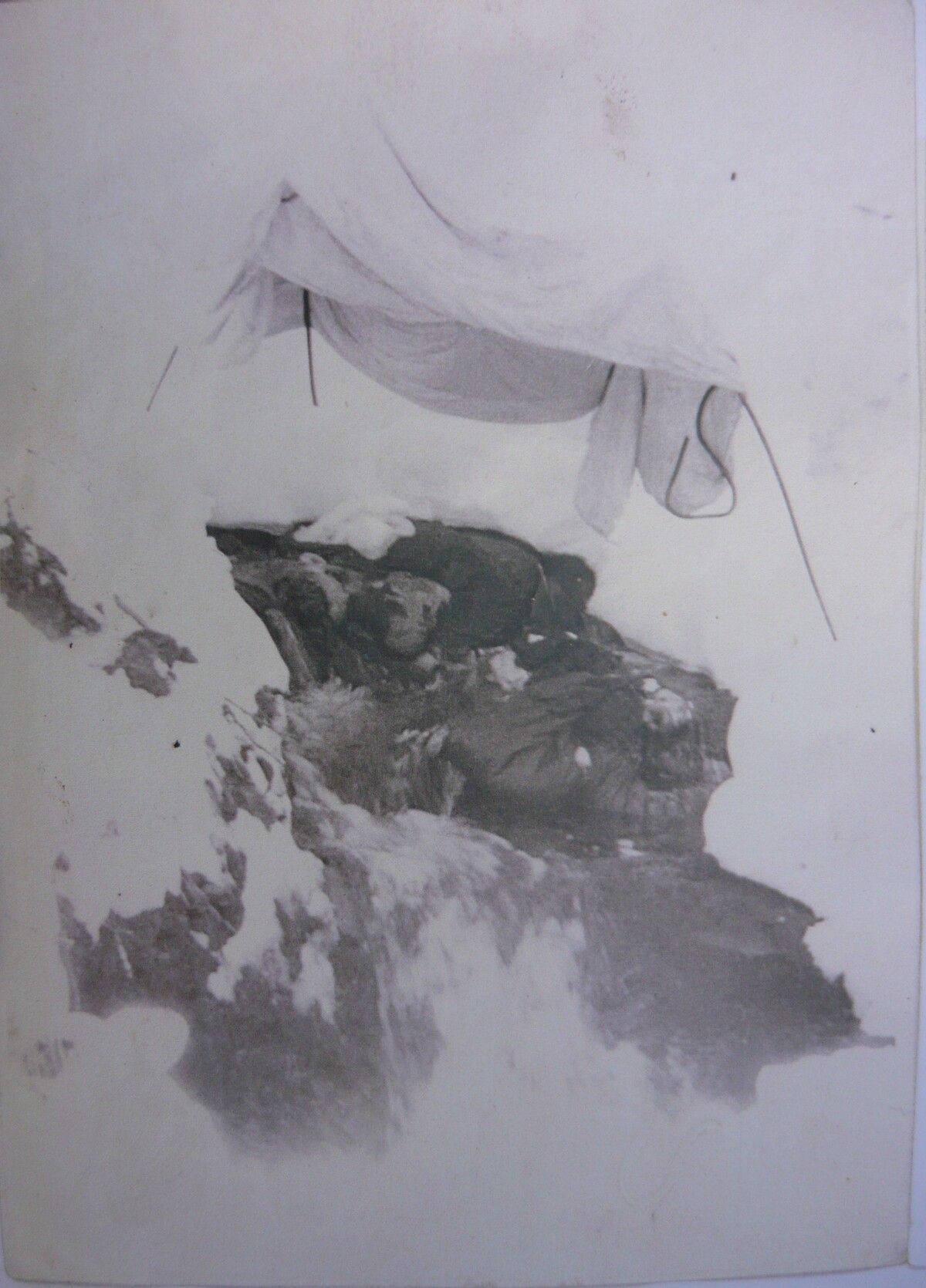
Tarpaulin over the corpses.
We very carefully cleared the den a bit. Now it became clear that there was no point in straying too far from the den. We needed to search the nearest 10-15 square meters. We didn't examine the trench in detail, but the condition of its walls showed that the stream had filled with snow evenly, without any irregularities or changes in snow color, indicating uneven filling of its valley. I subsequently received many questions about this, with the authors suggesting that the guys, supposedly hiding from the wind, had dug a cave in the trench wall and were trapped there. This couldn't be determined from the trench walls; no traces of a cave were visible. Another personal observation of mine: they cut off the tops of the fir trees and made the den after the guys froze under the cedar, since their belongings, including pants cut at the crotch, were on the den. This is only done from corpses.
These events took place before lunch. After lunch, I took the probe and went to the excavation site to make a test pit, as is customary in geology. I made a few thrusts. That's when I hit Lyuda's neck. On the probe hook, instead of moss, was a white piece of flesh the size of a thumbnail. If my probe had been tilted 10 cm to the right or left, we would have gone up the stream to probe the snow. It was both a coincidence and a pattern. Of course, we still would have found them, but perhaps a week or two later. And considering it's May, the final exam period has begun at the institute, and exams are coming soon, and I'm in my fifth year, there's no need to explain what these extra weeks away from the institute mean for us.
Someone walking behind me returned to camp, and a few minutes later everyone showed up.
I inserted the probe back into the hole and began carefully clearing the snow.
We dug Lyuda out fairly quickly, helped by the long daylight. The heads of the other three boys immediately appeared. Lyuda was getting in the way of our reaching the others, so we wrapped her face down in some rags and placed her on the left bank of the stream. Then we carefully dug out the remaining three, chest-deep. Having prepared everything as best we could for the inspection of the arriving authorities, something had to be done with Lyuda's body. We dug a grave-sized snow hole on the left bank of the stream, as the snow there was deeper than on the right bank. They carried Lyuda and laid her out for the night in her first grave. Although it was snowy and less well-kept, it became her first resting place.
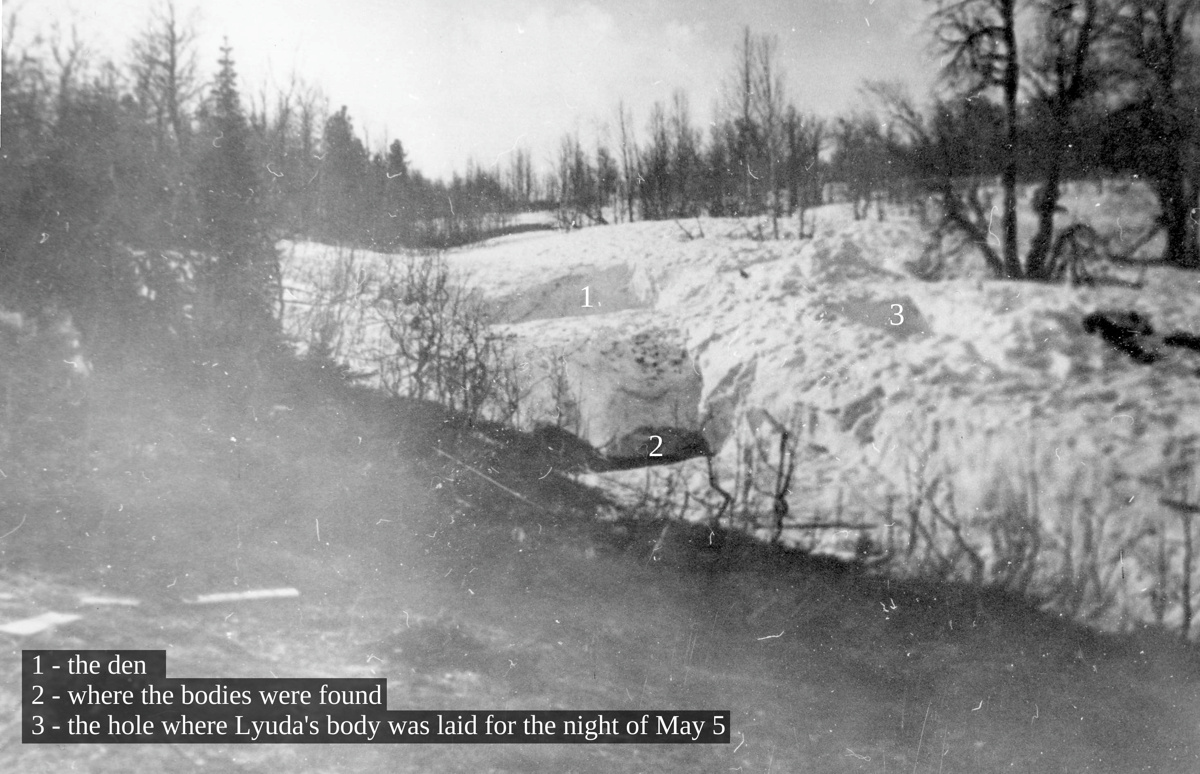
1 - den, 2 - bodies, 3 - the hole where Lyuda's body was laid for the night of May 5
That was the end of our day's work. Ortyukov urgently sent a radiogram (somewhere??, Ivdel or Sverdlovsk). While Nevolin was working the radio, we all left the tent. I learned the contents of the radiogram much later from Anna Matveeva's book.
That's it!!! We're waiting for the authorities to arrive!!
36. T. Hadjiyska: Karelin says you dug a large pit where nothing was found (6S-31). I think this is the same pit where you continued digging deeper (6S-36). Even without looking at the photographs, can you recall whether you dug a large hole, abandoned it, and started digging again in a different place for the den? Was there a large pit where nothing was found, neither den nor bodies?
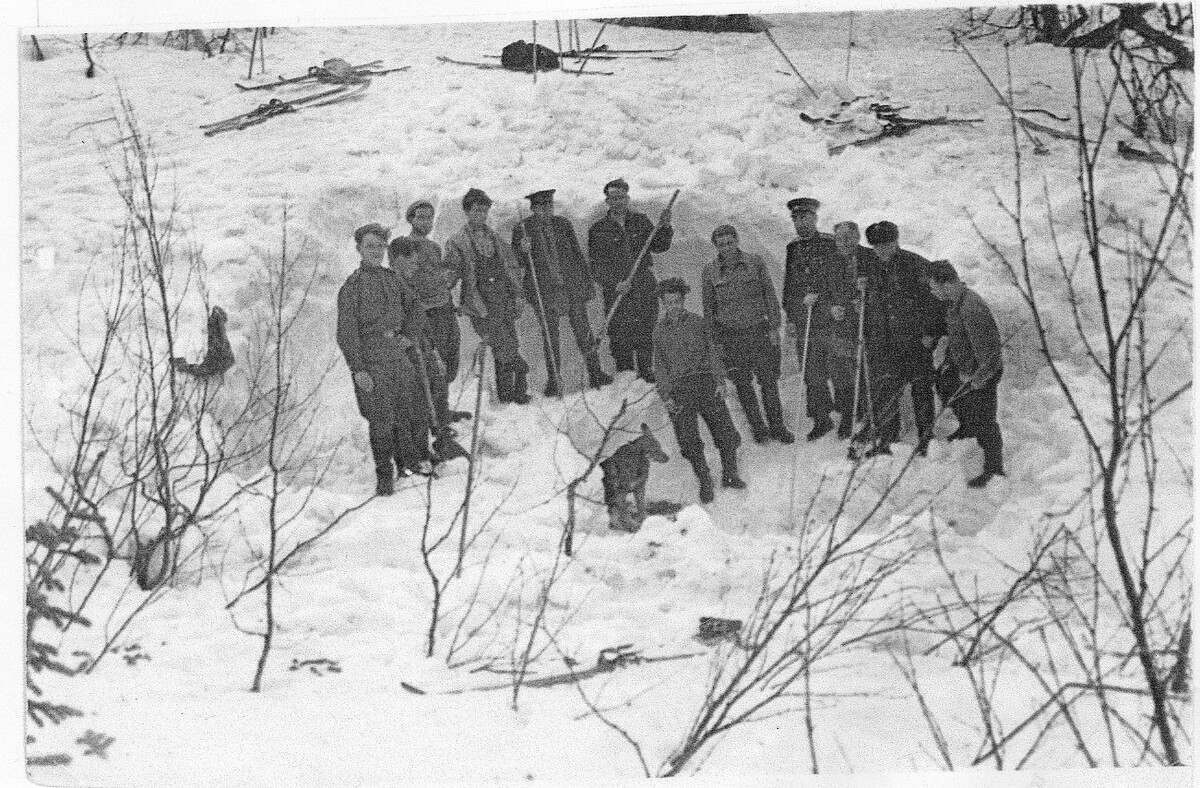
6S-31
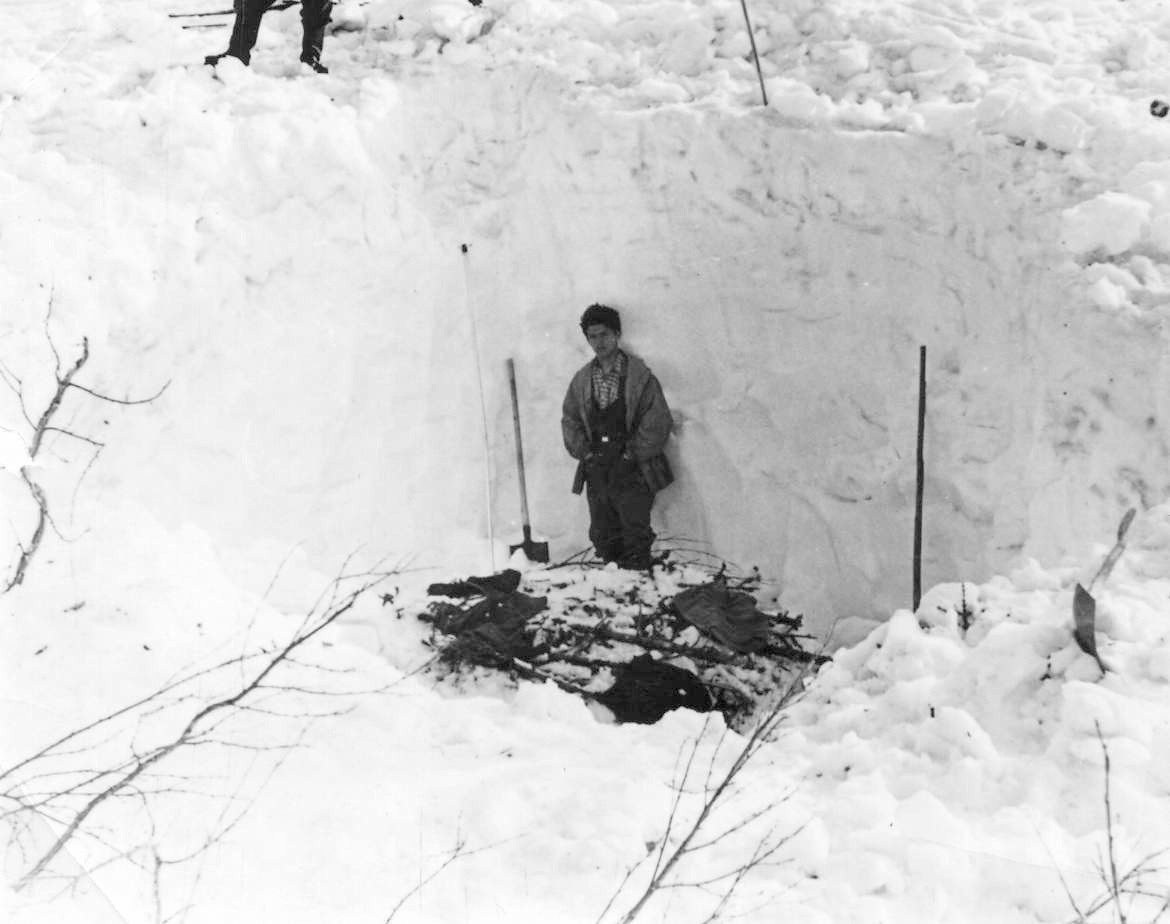
6S-36
Askinadzi: We didn't do any major excavation, much less any auxiliary one. We weren't digging for the sake of digging—for the first, we followed small green twigs on the ground, not thinking about where they would lead us. They led us to the den, but they could have led anywhere. Even though I did not have any knowledge, my compelling logic was that there is no point in me straying far from the den with the probe.
37. T. Hadjiyska: There is a big hole where the den was found. Why didn't you widen this hole to search for the bodies, how did you just hopped to the next hole?
Askinadzi: After dinner I started probing from the den down the flow of the river. As I said, I hit Lyuda's head very shortly after that. Only then we started digging, not before, not on a hunch.
38. T. Hadjiyska: Was there a 6-meter distance between the first excavation site and the second, as Tempalov wrote?
Askinadzi: He didn't measure anything with a tape measure (though he should have for the investigation!), he simply wrote it down as he thought. I have correspondence with Tempalov, in which he agreed with me that the distance between the excavations was no more than 2...2.5 meters. Even then, I didn't have factual data, but I had a compelling logic that there was no point in me straying far from the den with a probe. There was also a state of distracted attention. We didn't imagine that 45...50 years later, we'd be turned inside out, demanding details. And our state was like this: you watch a body being removed, and all the while you're wondering what to pack it in so the pilots can take it on board.
39. T. Hadjiyska: When the bodies were found, were you already expecting problems with transportation? The scandal took place on May 7th, right? You removed the bodies from the water on May 6th. There were no problems with the first bodies in March.
Askinadzi: Yes, we expected there would be difficulties transporting the bodies; we talked about this in the briefings. If the first five bodies were dispatched without issue, it was because they were "dry". "Our" bodies, however, were almost half-decomposed due to their prolonged exposure to water. The question what would they be wrapped in to fly coudln't be avoided. Perhaps that's why Ortyukov quickly resolved the conflict with the helicopter pilots, anticipating the problem during the briefings.
40. T. Hadjiyska: What do you remember from May 6?
Askinadzi: The morning of May 6th was a normal wake-up call. A quiet breakfast – thick rice porridge with stewed meat, coffee with condensed milk, and crackers. Deep silence. Everyone had their own thoughts, their own expectations for the arrival of the authorities.
Some unknown force persistently drew us to the excavations. After breakfast, without any prior arrangement, we all headed to the cedar tree. Even the unemployed dog handler came with us. Usually, when we left camp before, we'd tell him to sleep for me or Suvorov today. But here he perked up and was among the first to walk!
But the cedar tree held no attraction for us today. We headed straight to the excavations. We inspected the results of our work from the previous day and, each doing whatever came to mind, killed the time. Around 11:00 AM, the hum of helicopter engines became audible. Some, including Ortyukov, began to ascend closer to the helipad to greet the guests. Several people had arrived. I didn't climb the mountain, but waited below in a prominent spot. There was a clearing there from which everything was clearly visible. Only the Ivdel authorities had arrived. The Sverdlovsk authorities were expected tomorrow.
The crowd of guests, along with those they had met, descended. They acknowledged their introductions with mutual nods.
The arrivals knew a priori that they were distinguished excursionists and expected to be treated accordingly. Ortyukov himself volunteered to act as tour guide. First, he led them to the cut treetops, showed them the small branches, and explained how we had used them to reach the platform. With a theatrical gesture, he showed them the platform. They all gazed at it and the things lying on it. We thought Ortyukov was simply mocking them, putting on a show. So Ortyukov, in the same style, drove them to the corpses.
One of the new arrivals, without introducing himself, approached me with a notebook in hand and began asking me questions about Dubinina. Much later, I learned that this was Tempalov, an investigator with the Ivdel prosecutor's office. I gave him a step-by-step account of the excavation's progress. Lyuda lay at his feet. He listened without asking any questions. Apparently, my account was detailed enough. He was writing something down, but mostly listening.
It was decided to retrieve the bodies without waiting for the Sverdlovsk authorities.
Ortyukov, so as not to offend anyone, after hearing Nikolay and I's decision (we'd drawn a sort of lot with him the day before) that his team would be the ones to retrieve the bodies, agreed, leading the body removal effort himself.
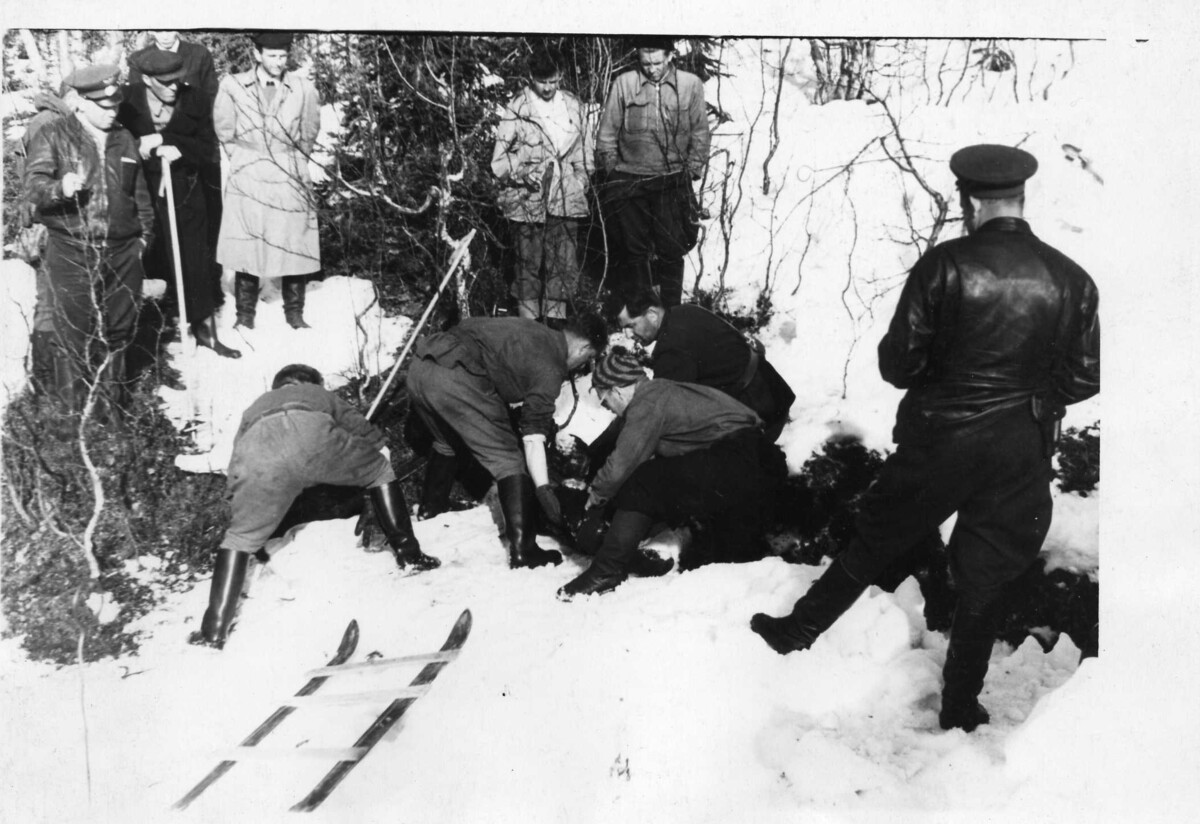
Vasiliy Tempalov in a long white coat, watches as bodies are pulled from the stream. Skis for transportation.
When we were recovering the boys' bodies, Zolotaryov had a notebook in his hand (See answer 47: Askinadzi never saw this notebook in Zolotaryov's hand). Ortyukov, like a madman, rushed toward it. I stood behind the colonel, about half a meter away. He frantically flipped through the wet pages. There was nothing but clean sheets, or sheets cleaned with water. He suddenly sank, finding nothing, only uttering, "Didn't write anything, you weakling." Later, in the evening after dinner, sitting by the stove, the colonel tried, carefully examining each page, trying to find at least some hint as to the cause of the group's death. Why A. Zolotarev held the notebook in his hands and wrote nothing down is anyone's guess. He probably had no time, and his hands were probably already frostbitten up to the elbows.
It was suggested, I don't remember by whom, that we pull the boys out from under the snow without digging them out. Simply pull them out from under the snow. Whether this was right or wrong is for the experts to decide—they know best. During the process of removing the bodies, Ortyukov had the notebook with him the whole time, as shown in many well-known photographs. Where it went, I still don't know. Perhaps Ortyukov kept it as a souvenir. I do know one thing: it wasn't included in the destruction report for the supposedly unnecessary documents prepared by Maslennikov and Tempalov, including the route sketches Dyatlov had made on tracing paper after visiting forester Rempel. Later, in his 1991 letter to a television program, Ivanov would say he remembered nothing about the notebooks.
We carefully removed the bodies from under the snow.
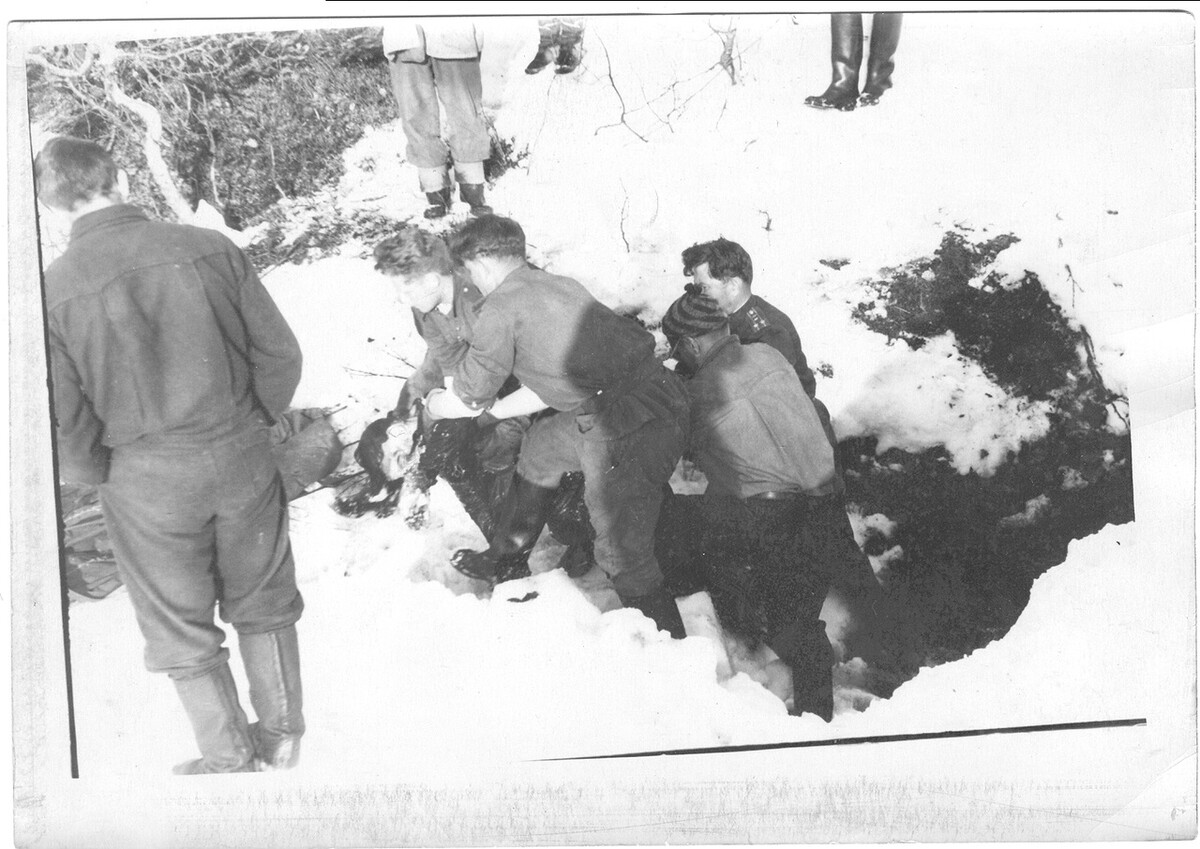
Colonel Ortyukov, soldiers, Mohov in reverse. Presumably the recovery of Kolevatov's body. On the right (covered by snow) is a waterfall and an excavation site with the bodies.
Having finished the excavation, we placed the bodies on the left bank of the stream.
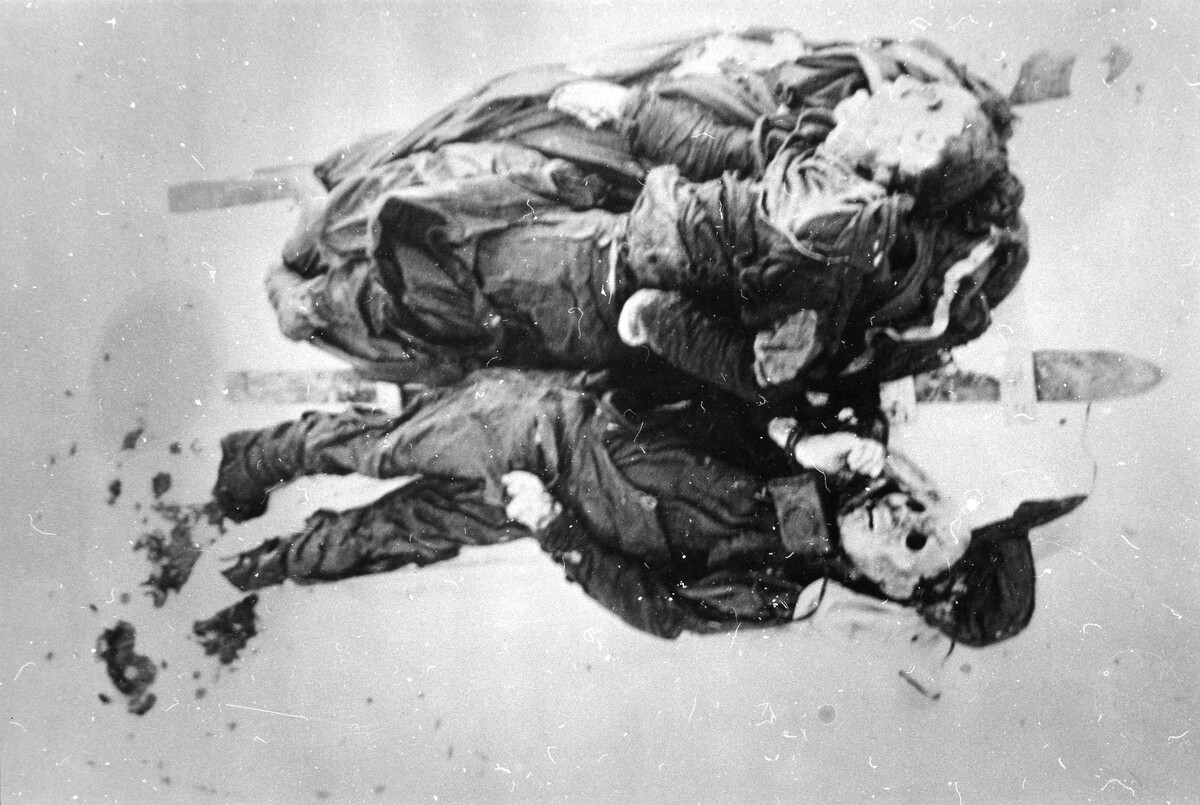
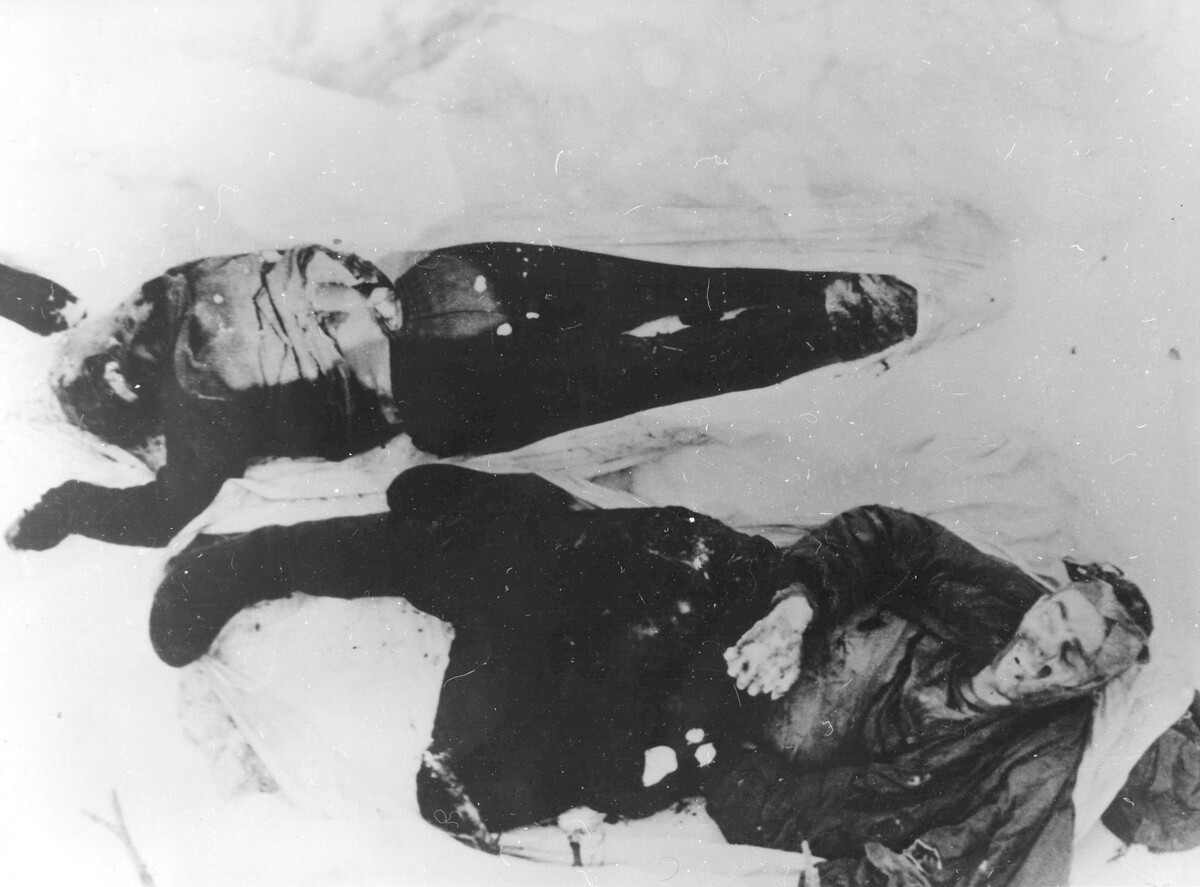
It should be noted that no one directed us, nor was anyone telling us what to photograph or how. Tempalov, in particular, had a camera. Apparently, the last three photos were his. Subsequently, no one from the Ivdel or Sverdlovsk prosecutor's offices ever approached us for photos. This is understandable, since the negatives were immediately distributed after development, and acquiring them, or the finished photos themselves, was then relatively easy.
We expected it would be difficult to load the bodies into the helicopter in this condition, so we packed them in the liners of our sleeping bags and whatever scrap rags we had. It turned out that wasn't enough. The pilots (Potyazhenko) flatly refused to take the bodies in this condition. They demanded coffins! But where would they get them on the pass? A "minor conflict" ensued between Ortyukov and Potyazhenko! Ortyukov even pulled out a pistol from somewhere and started threatening Potyazhenko, but he wasn't intimidated! "You're an officer, and I'm an officer, and we must follow our superiors' orders." Ortyukov didn't immediately cool down. Seeing that he was "well drunk" (he must have had a stash of alcohol), I slowly began to move him away from the pilot until the colonel cooled down completely.
Having captured everyone who wanted to come, including Tempalov, the helicopter flew away without taking the bodies.
Ortyukov continued to rant and rave for a long time, barely enduring insults from some captain (he, a COLONEL!), but a good dinner and some notebooking by the stove finally calmed him down.
41. T. Hadjiyska: Who decided who would retrieve the bodies and why? In 2014, you said, "They drew lots, and the soldiers got to do it." That seems strange to me. What kind of lot was that? Couldn't they have simply told you, "The soldiers are stronger, let them carry out the bodies"? That's important.
Askinadzi: Only the medical examiner, Vozrozhdenniy, had the final say, but Ortyukov, though not very insistently, demanded a rapid autopsy right there at the pass. The word "lot" must be understood loosely. We simply agreed with Nikolay Kuzminov, the leader of the soldiers' group, that it would be better if his men retrieved the bodies. Ortyukov didn't object.
42. T. Hadjiyska: How far away were you, students, from the pit where the bodies were being recovered?
Askinadzi: We stood wherever there were empty seats. I stood in the foreground next to the pilot. Someone stood next to me. Vadim Fyodorov stood opposite me next to Nikolay Kuzminov. We stood wherever we could, wherever we had the best view.
43. T. Hadjiyska: You told Tolya Mohov to climb the tree and take photos.
Askinadzi: I usually didn't interfere with photographers, but this birch tree offered a good panoramic view of the body removal.
44. T. Hadjiyska: No one forbade you from taking photos, but none of the investigators took photos. Did they ask for photos later?
Askinadzi: No.
45. T. Hadjiyska: Do you know who took these photos?
Askinadzi: No. Probably Tolya Mohov.
6S-52
6S-53
Askinadzi: The problem is that these two photographs are included in the criminal case, and either one of the investigators took these pictures or requested them from Mohov.
46. T. Hadjiyska: About Zolotaryov's notebook. How far were you from Ortyukov when he held it in his hands?
Askinadzi: I was standing half a meter behind him.
47. T. Hadjiyska: Did you see where Ortyukov took it from? Did you see it in Zolotaryov's hand or only when Ortyukov was already holding it?
Askinadzi: I only saw the notebook when it was already in Ortyukov's hands. I didn't see whose hands he took it from.
48. T. Hadjiyska: Is this Zolotaryov's notebook?
Askinadzi: Yes. At that time, no one doubted it.
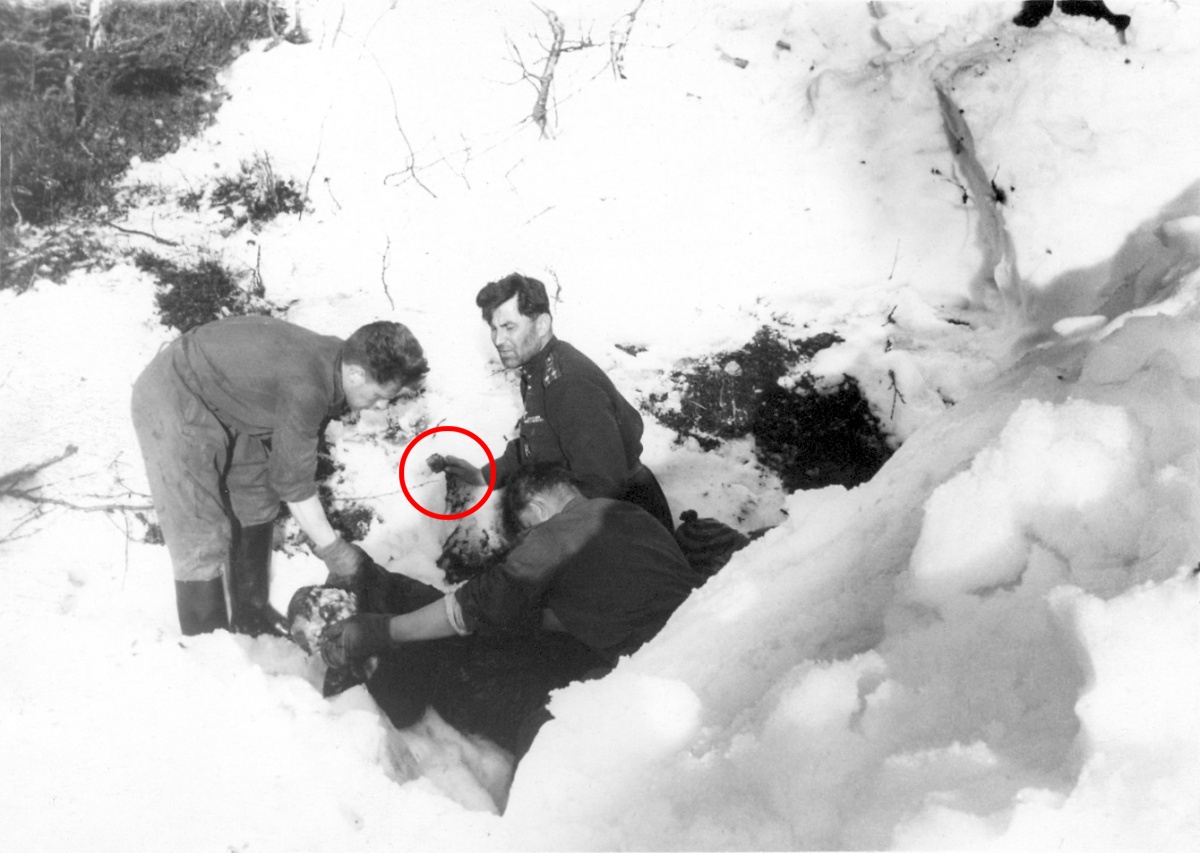
49. T. Hadjiyska: You say Ortyukov leafed through the pages, saw nothing written, and cursed. Weren't the pages wet, how did he unfold them?
Askinadzi: Exactly!!! How do you turn the pages of a book or notebook with wet pages? Carefully, page by page. Maybe I didn't use the word "leafe through" quite correctly, but I thought it would be clear to everyone, even without further explanation, what to do to turn all the wet pages.
50. T. Hadjiyska: Do you remember Zolotaryov wearing a camera around his neck?
Askinadzi: No. I don't remember many details, because my thoughts were racing like a kaleidoscope. Some things stuck in my mind, others slipped away. But I didn't mind.
51. T. Hadjiyska: Where and in what did the bodies spend the night of May 6th?
Askinadzi: We placed them in the liners of our sleeping bags and carried them to the landing site.
52. T. Hadjiyska: What happened on May 7th?
Askinadzi: Morning. Waiting for something more definite regarding the transport of the bodies. I wonder if the pilots will deliver the coffins, as their instructions required?
I closely monitored Ortyukov's behavior. Of course, I couldn't prevent, much less forbid, him from getting drunk, but I was prepared to intervene in any of the colonel's absurd antics. I didn't notice the colonel's hangover. War had trained his young body!!
We heard the helicopter's landing approach well in advance—loud sounds echoed off the distant mountains.
A group of officials from Sverdlovsk arrived, including Ivanov (Vozrozhdenniy also arrived, although I hadn't known him before).
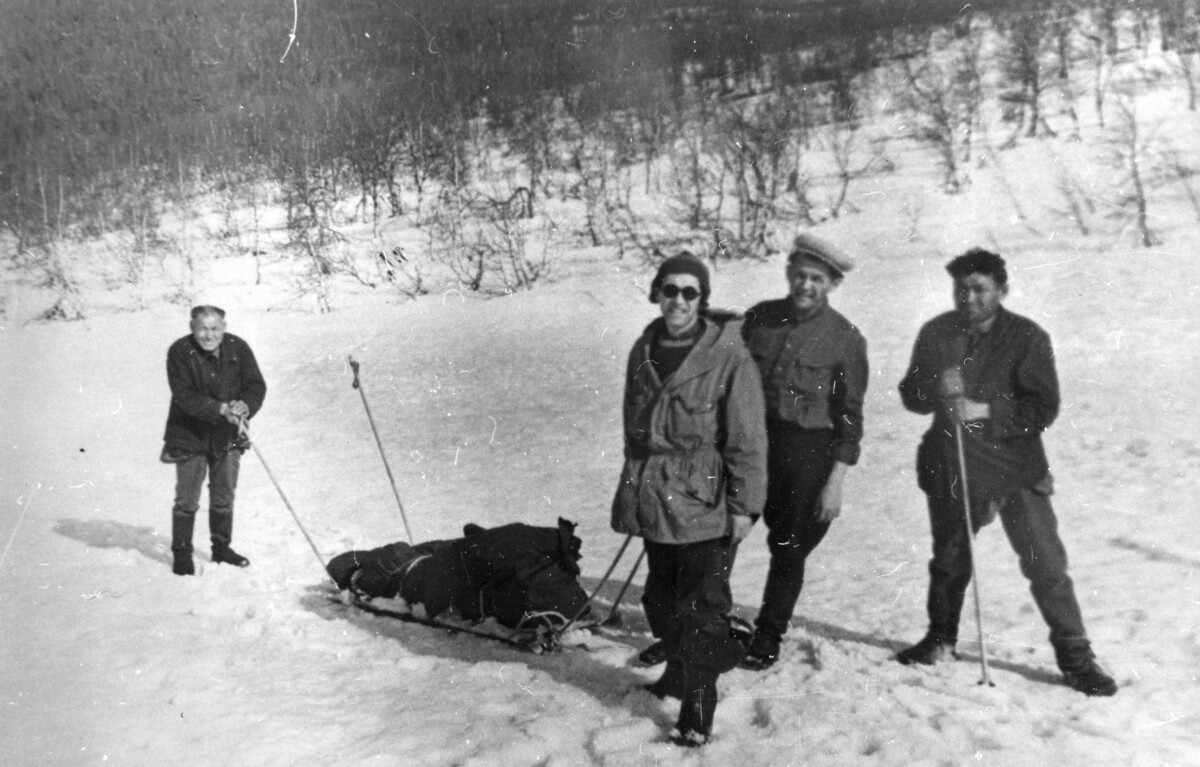
Transporting bodies to the landing site. The photograph is included in the Case files materials of Volume 2 (p. 86)
At the center of the "trinity" is the medical examiner Vozrozhdenniy.
A cursory examination of the bodies began. Resurrectionist declared that evacuation of the bodies was completely safe from a hygienic standpoint, and that the bodies could be transported. No signs of violence were found during the initial examination on site. But this wasn't enough for Ortyukov! He demanded an express forensic medical examination right there at the pass. The colonel again began to stir up trouble, just like the day before. He was comfortable when he was in charge—we carried out all his orders and comments with gusto. But now, suddenly, there was refusal after refusal. Even a pistol couldn't convince him of his absolute rightness! Resurrectionist explained to the colonel as clearly as he could the impossibility of conducting a forensic medical examination under these conditions. It seemed Ortyukov understood him. The budding conflict did not continue!
Instead of coffins, the pilots brought rubberized bags with them, into which we placed the bodies, but this time, too, the pilots did not take the bodies. Something didn't please them again!
We descended to camp. It was already approaching lunchtime, but no one paid any attention; everyone was eager to finish their business with the bodies.
Ivanov and a group of new arrivals headed toward the cedar, while we continued to crowd around the excavation site.
After a while, Ivanov approached me; apparently someone had told him how Lyuda's body had been discovered. I told him everything in detail, without skimping on details. He didn't interrupt, listening attentively. I got the feeling that Ivanov, listening to me, was scolding himself for overlooking the obvious natural clue. Listening attentively, he lowered his head and looked at his feet. This pose spoke of a deep inner conflict.
When I finished, he thanked me, and, probably in a burst of gratitude, he shook my hand and promised to give me a full set of photographs from the Dyatlov group's film upon his return to Sverdlovsk. But he didn't fulfill his promise. Apparently, there was no opportunity. I won't be offended! I went to the prosecutor's office once, but the photos weren't ready yet. And then I was overwhelmed by my studies – I had to urgently submit three term papers, two of which were in specialized subjects (results: two A's and one C!). The helicopter was preparing to fly back.
Ivanov sent Vozrozhdenny to Ivdel to await the arrival of the bodies, while he himself remained behind. The evacuation of the bodies took two days. For two nights, the bodies lay on the pass near the fires. Mokhov, Suvorov, and Kuznetsov guarded them from animals and birds. As the leader, I had no part in this; I needed to be present at the briefings that decided the order in which to dismantle the camp.
It's clear that one helicopter flight wouldn't be enough.
That's it! The saga of searching for the Dyatlov group is over. Everyone has been found, everyone has been handed over to the authorities! The daily grind has begun.
Ivanov silently left the camp to attend to his own affairs. He would later describe his adventures and discoveries in detail in a newspaper article, no longer the Kostanay Region prosecutor, but a retired lawyer.
The main refrain of the article is a belated apology to the relatives of the victims for the forced lie. In my opinion, Ivanov was once told the true cause of the group's death in Moscow, for which he was forced to sign a non-disclosure agreement. But when he wrote his article, the country to which he swore "to never see freedom again" no longer existed. More serious classified information had been revealed, while the Dyatlov group's secret remained taboo. He could have revealed it to the public. But no! His epaulettes oblige him!!
Late in the evening, around 3-4 pm, even before the helicopter's departure, several reindeer herds with their mushers arrived. Apparently, this was the main reason for the crew's long delay; both the pilots and the mushers needed this meeting. The mushers needed alcohol, and the pilots, as a rule, needed processed pelts for their wives or daughters to make collars!! But this time, the exchange fund was antlers—young, still-blooded deer antlers. The execution of the deer began.
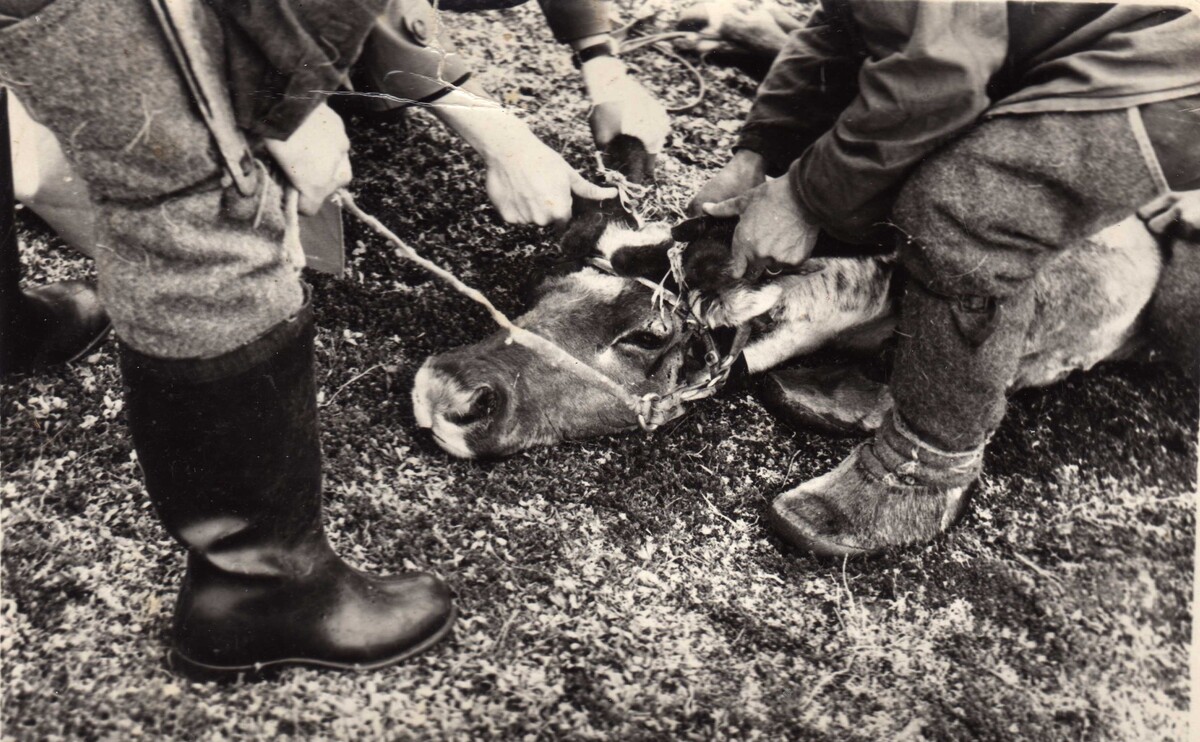
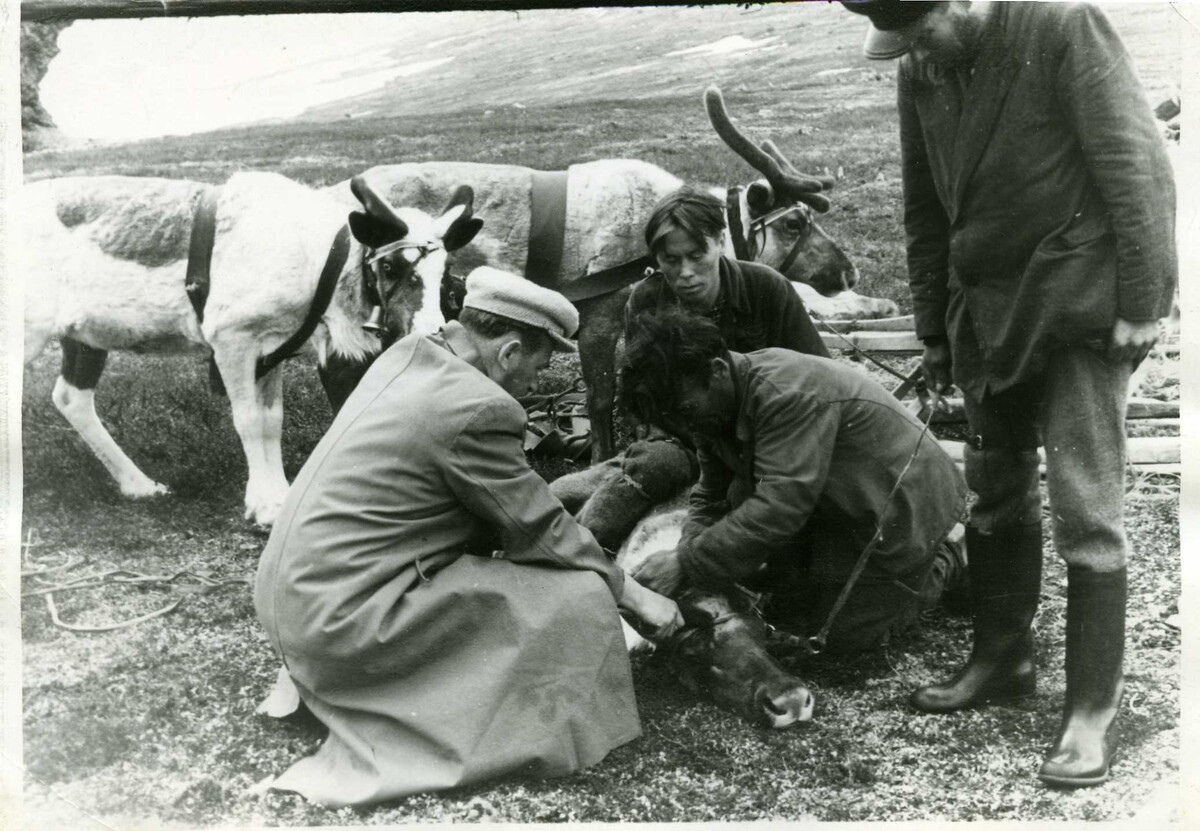
When the antlers are sawed off, the deer feels no pain. They probably still make pantocrine from antlers today, a drug similar to Viagra.
Oh, our mutual friend Resurrection also took part in the execution!! But why would he need it? Apparently, he's getting older and needs a stimulant!! "Pantocrine" at home is simply an alcohol tincture of crushed antlers. I don't know how it "helps", I haven't tried it, and there was no need.
After collecting everyone who wanted to go, the helicopter flew away. The mushers, having received their share, left with the deer.
After dinner, my students went out for the second night to guard the carcasses from any accidents. Ortyukov didn't hold his traditional briefings that day, wishing everyone a good night!
Thus ended the eventful day of May 7th, 1959!!
What do you remember?? Due to excitement or other reasons, sleep didn't come that night. My arms, legs, and body were asleep, but my brain remained awake! I think it wasn't just me — others couldn't sleep either! But we were all alert during the day! This is what young age does.
53. T. Hadjiyska: Please tell us what you remember from May 8th.
Askinadzi: The climb was lazy. There was no need to rush—the bodies were piled high on the pass. The guys who had spent two nights guarding the corpses, protecting them from potential animals and birds, returned to camp.
Before breakfast, at a briefing, we decided on the order of shipment to Ivdel. The difficulty was that the decision had prioritized those items, other than the tent, for which someone would have to be responsible. The decision had been made and we were ready to carry it out, but we didn't know what kind of cargo it was. So we had to pile everything into various piles, as if they would sort it out back in Ivdel. The piles visually corresponded to the volume of the helicopter's cargo hold.
Towards midday, the helicopter arrived, and the soldiers loaded the corpses into it. Then the colonel started showing up again, demanding that the corpses be taken straight to Sverdlovsk. For the last two or three days, Ortyukov had been constantly demonstrating his nervousness with silly tantrums. The pilots explained to him that they had received orders from their superiors to deliver the bodies only as far as Ivdel.
The helicopter departed, taking with it some of the searchers, including a dog handler and a few others.
We began tidying up the camp. There were no specific areas assigned to groups, so everything was done haphazardly. But progress was made.
We separated the broken skis from the good ones. We left the broken skis stuck in the snow until summer. When the snow melted, they would fall off. In subsequent years, searchers (Valya Yakovenko's group, Taimen's group, and others) often found spare parts from these skis.
There was a lot of uneaten food. They decided to give them to the soldiers' group, piling them up in the front corner of the tent. Let's send them off with the soldiers—it'll be safer that way!
They lit a fire and burned everything they deemed unnecessary. The camp grounds were becoming more or less civilized.
After dinner, lights out. How unusual it had become to be without the dog handler's tedious jokes!!!
After returning to Sverdlovsk, I learned that additional groups were being formed to replace us, specifically Sogrin's group (for the third time) and Martyushev's group. Naturally, as soon as word got out that we had found the bodies, their departure was delayed.
54. T. Hadjiyska: What happened on May 9, 1959?
Askinadzi: May 9th! At that time, it wasn't yet a "red-letter day" *. We congratulated the colonel on the holiday and continued work around the camp. The main difficulty was getting the contents of each pile onto the airstrip. There were a lot of things, so a lot of time was spent transporting them. Everyone participated, except, I think, Nevolin, Ortyukov, and the Kurikov brothers.
The helicopter flew in once a day, usually before lunch.
That day, it arrived at 11:00 AM. The loading of the things began.
After that, the camp had enough things for two more flights and a tent with a stove, and that's enough for three more flights.
That evening, after dinner, I asked Ortyukov for permission to leave tomorrow, and he gave the go-ahead! Tomorrow, that is. I'm leaving on May 10th, barring any unforeseen circumstances.
As I later learned, Ortyukov, Nevolin, the Kurikov brothers, and some of the remaining soldiers were on the last flight out on May 13th.
That's it! The saga of searching for the dead members of the Dyatlov group is over. It lasted 75 days, from February 27th to May 13th, 1959.
* May 9 was not a public holiday (non-working day) in the Soviet Union in 1959. While it was celebrated as Victory Day immediately following the war, it was downgraded to a regular working day in 1947. The day was not declared a non-working, national holiday again until 1965.
1945–1946: Celebrated as a holiday
1947–1964: A regular work day
1965 onwards: Restored as a non-working public holiday
55. T. Hadjiyska: Tell us about the fireballs everyone was talking about in 1959. Did you see anything in the sky? What do you think others saw? Did you discuss the fireballs as a reason to leave the tent, or in some other way in connection with the Dyatlov group incident?
Askinadzi: Fireballs are a fairly rare phenomenon and don't appear on every shift. We didn't see any on our shift. We observed them on Sogrin's shift, and, as Sergey himself said, there was nothing particularly tragic, as Nikolay Kuzminov describes. Incidentally, I corresponded with his wife, and the phrase "as soon as I arrived in the Urals" is confusing to many. As his wife wrote, they lived in Ivdel, and immediately after our shift ended (essentially after the search ended), they got married. A year later, they had a son, and they decided to move south to the Black Sea to visit relatives. Due to the climate change, their son became constantly ill, and they returned, but not to Ivdel, but to Nizhnyaya Salda. In 2001, Nikolay didn't survive his first heart attack and died in the hospital.
The issue of the fireballs was never discussed on our shift. At Ortyukov's briefings, we only discussed current problems and issues.
56. T. Hadjiyska: The question concerns Kuzminov and his letter. Please comment on what he wrote. Did Kuzminov say anything about the panic that gripped the soldiers when he had to fire his pistol to calm them?
Askinadzi: Judging by Nikolay's recollections, he had been on the search since March, meaning he was on all shifts. I can only comment on his time on our shift. (Askinadzi's comments were added to Kuzminov's letter.)
Add comment
Related articles
 New photographs from 1959
 Askinadzi 2025
 Askinadzi 2014
 Askinadzi 2013
 Askinadzi 2012
 Askinadzi letters - part 1
 Askinadzi letters - part 2
 Askinadzi letters - part 3
 Photos of Askinadzi
 Chicken a la Otorten


